Khóa học
IELTS Online
IELTS Online
Giảm đến 18%
Đăng ký ngay
Mục lục [Ẩn]
IELTS Reading là một trong những kỹ năng “khó nhằn” nhất, đòi hỏi thí sinh không chỉ có vốn từ vựng học thuật tốt mà còn phải nắm vững chiến lược đọc hiểu, kỹ năng xác định thông tin và quản lý thời gian hiệu quả. Bài viết tổng hợp đề thi IELTS Reading có đáp án mới nhất 2025/2026, bao gồm đề thi thật và bộ IELTS Reading Cambridge chuẩn format. Tất cả đề đều đi kèm đáp án giúp bạn làm quen cấu trúc đề thi, rèn kỹ năng đọc hiểu học thuật và cải thiện tốc độ làm bài.
Learning to Walk
These days the feet of a typical city dweller rarely encounter terrain any more uneven than a crack in the pavement. While that may not seem like a problem, it turns out that by flattening our urban environment we have put ourselves at risk of a surprising number of chronic illnesses and disabilities. Fortunately, the commercial market has come to the rescue with a choice of products. Research into the idea that flat floors could be detrimental to our health was pioneered back in the late 1960s in Long Beach, California. Podiatrist Charles Brantingham and physiologist Bruce Beekman were concerned with the growing epidemic of high blood pressure, varicose veins and deep-vein thromboses and reckoned they might be linked to the uniformity of the surfaces that we tend to stand and walk on.
The trouble, they believed, was that walking continuously on flat floors, sidewalks and streets concentrates forces on just a few areas of the foot. As a result, these surfaces are likely to be far more conducive to chronic stress syndromes than natural surfaces, where the foot meets the ground in a wide variety of orientations. They understood that the anatomy of the foot parallels that of the human hand – each having 26 bones, 33 joints and more than 100 muscles, tendons and ligaments – and that modern lifestyles waste all this potential flexibility.
Brantingham and Beekman became convinced that the damage could be rectified by making people wobble. To test their ideas, they got 65 factory workers to try standing on a variable terrain floor – spongy mats with varying degrees of resistance across the surface. This modest irregularity allowed the soles of the volunteers’ feet to deviate slightly from the horizontal each time they shifted position. As the researchers hoped, this simple intervention made a huge difference, within a few weeks. Even if people were wobbling slightly, it activated a host of muscles in their legs, which in turn helped pump blood back to their hearts. The muscle action prevented the pooling of blood in their feet and legs, reducing the stress on the heart and circulation. Yet decades later, the flooring of the world’s largest workplaces remains relentlessly smooth.
Earlier this year, however, the idea was revived when other researchers in the US announced findings from a similar experiment with people over 60. John Fisher and colleagues at the Oregon Research Institute in Eugene designed a mat intended to replicate the effect of walking on cobblestones*. In tests funded by the National Institute of Aging, they got some 50 adults to walk on the toots in their bare feet for less than an hour, three times a week. After 16 weeks, these people showed marked improvements in mobility, and even a significant reduction in blood pressure. People in a control group who walked on ordinary floors also improved but not as dramatically. The mats are now available for purchase and production is being scaled up. Even so, demand could exceed supply if this foot-stimulating activity really is a ‘useful non-pharmacological approach for preventing or controlling hypertension of older adults, as the researchers believe.
They are not alone in recognising the benefits of cobblestones. Reflexologists have long advocated walking on textured surfaces to stimulate so-called ‘acupoints’ on the soles of the feet. They believe that pressure applied to particular spots on the foot connects directly to particular organs of the body and somehow enhances their function. In China, spas, apartment blocks and even factories promote their cobblestone paths as healthful amenities. Fisher admits he got the concept from regular visits to the country. Here, city dwellers take daily walks along cobbled paths for five or ten minutes, perhaps several times a day, to improve their health. The idea is now taking off in Europe too.
People in Germany, Austria and Switzerland can now visit ‘barefoot parks’ and walk along ‘paths of the senses – with mud, logs, stone and moss underfoot. And it is not difficult to construct your own path with simple everyday objects such as stones or bamboo poles. But if none of these solutions appeal, there is another option. A new shoe on the market claims to transform flat, hard, artificial surfaces into something like uneven ground. ‘These shoes have an unbelievable effect,’ says Benno Nigg, an exercise scientist at Calgary University in Canada.
Known as the Masai Barefoot Technology, the shoes have rounded soles that cause you to rock slightly when you stand still, exercising the small muscles around the ankle that are responsible for stability. Forces in the joint are reduced, putting less strain on the system, Nigg claims.
Some of these options may not appeal to all consumers and there is a far simpler alternative. If the urban environment is detrimental to our health, then it is obvious where we should turn. A weekend or even a few hours spent in the countryside could help alleviate a sufferer’s aches and pains, and would require only the spending of time.
However, for many modern citizens, the countryside is not as accessible as it once was and is in fact a dwindling resource. Our concrete cities are growing at a terrifying rate – perhaps at the same rate as our health problems.

Questions 1 – 5
Do the following statements agree with the information given in Reading Passage? Write:
TRUE if the statement agrees with the information
FALSE if the statement contradicts the information
NOT GIVEN if there is no information on this
1. Brantingham and Beekman were the first researchers to investigate the relationship between health problems and flat floors.
2. The subjects in Fisher’s control group experienced a decline in their physical condition.
3. The manufacturers are increasing the number of cobblestone mats they are making.
4. Fisher based his ideas on what he saw during an overseas trip.
5. The Masai Barefoot Technology shoes are made to fit people of all ages.
Questions 6 – 8
Choose the correct letter, A, B, C or D.
Write the correct letter in boxes 6 – 8 on your answer sheet.
6. The writer suggests that Brantingham and Beekman’s findings were
A. ignored by big companies.
B. doubted by other researchers.
C. applicable to a narrow range of people.
D. surprising to them.
7. What claim is made by the designers of the cobblestone mats?
A. They need to be used continuously in order to have a lasting effect.
B. They would be as beneficial to younger people as to older people.
C. They could be an effective alternative to medical intervention.
D. Their effects may vary depending on individual users.
8. Which of the following points does the writer make in the final paragraph?
A. People should question new theories that scientists put forward.
B. High prices do not necessarily equate to a quality product.
C. People are setting up home in the country for health reasons.
D. The natural environment is fast disappearing.
Questions 9 – 14
Complete the summary below.
Choose ONE WORD ONLY from the passage for each answer.
Write your answers in boxes 9-14 on your answer sheet.
In their research, Brantingham and Beekman looked at the complex physical 9.______ of the foot and noted that the surfaces of modem environments restrict its movement. They invented a mat which they tried out on factory workers. Whenever the workers walked on it, the different levels of 10.______ in the mat would encourage greater muscle action. In turn, this lessened the effect of 11.______ on the cardiovascular system. Similar research was undertaken by John Fisher and colleagues in Oregon. As a result of their findings, they decided to market cobblestone mats to the elderly as a means of dealing with 12.______ . Reflexologists claim that by manipulating specific parts of the feet, the performance of certain 13.______ will also improve. Finally, Benno Nigg at Calgary University believes that specially shaped 14.______ on shoes should give health benefits.
Đáp án
|
1. TRUE |
8. D |
|
2. FALSE |
9. anatomy |
|
3. TRUE |
10. resistance |
|
4. TRUE |
11. stress |
|
5. NOT GIVEN |
12. hypertension |
|
6. A |
13. organs |
|
7. C |
14. soles |
Yawning
How and why we yarn still presents problems for researchers in an area which has only recently been opened up to study
When Robert R Provine began studying yawning in the 1960s, it was difficult for him to convince research students of the merits of ‘yawning science1. Although it may appear quirky to some, Provine’s decision to study yawning was a logical extension of his research in developmental neuroscience.
The verb ‘to yawn’ is derived from the Old English ganien or ginian, meaning to gape or open wide. But in addition to gaping jaws, yawning has significant features that are easy to observe and analyse. Provine ‘collected’ yawns to study by using a variation of the contagion response*. He asked people to ‘think about yawning’ and, once they began to yawn to depress a button and that would record from the start of the yawn to the exhalation at its end.
Provine’s early discoveries can be summanized as follows: the yawn is highly stereotyped but not invariant in its duration and form. It is an excellent example of the instinctive ‘fixed action pattern’ of classical animal-behavior study, or ethology. It is not a reflex (short-duration, rapid, proportional response to a simple stimulus), but, once started, a yawn progresses with the inevitability of a sneeze. The standard yawn runs its course over about six seconds on average, but its duration can range from about three seconds to much longer than the average. There are no half-yawns: this is an example of the typical intensity of fixed action patterns and a reason why you cannot stifle yawns. Just like a cough, yawns can come in bouts with a highly variable inter-yawn interval, which is generally about 68 seconds but rarely more than 70. There is no relation between yawn frequency and duration: producers of short or long yawns do not compensate by yawning more or less often. Furthermore, Provine’s hypotheses about the form and function of yawning can be tested by three informative yawn variants which can be used to look at the roles of the nose, the mouth and the jaws.
i) The closed nose yawn
Subjects are asked to pinch their nose closed when they feel themselves start to yawn. Most subjects report being able to perform perfectly normal closed nose yawns. This indicates that the inhalation at the onset of a yawn, and the exhalation at its end, need not involve the nostrils – the mouth provides a sufficient airway.
ii) The clenched teeth yawn
Subjects are asked to clench their teeth when they feel themselves start to yawn but allow themselves to inhale normally through their open lips and clenched teeth. This variant gives one the sensation of being stuck midyawn. This shows that gaping of the jaws is an essential component of the fixed action pattern of the yawn, and unless it is accomplished, the program (or pattern) will not run to completion. The yawn is also shown to be more than a deep breath, because, unlike normal breathing, inhalation and exhalation cannot be performed so well through the clenched teeth as through the nose.
iii) The nose yawn
This variant tests the adequacy of the nasal airway to sustain a yawn. Unlike normal breathing, which can be performed equally well through mouth or nose, yawning is impossible via nasal inhalation alone. As with the clenched teeth yawn, the nose yawn provides the unfulfilling sensation of being stuck in mid-yawn. Exhalation, on the other hand, can be accomplished equally well through nose or mouth. Through thin methodology Provine demonstrated that inhalation through the oral airway and the gaping of jaws are necessary for normal yawns. The motor program for yawning will not run to completion without feedback that these parts of the program have been accomplished.
But yawning is a powerful, generalized movement that involves much more than airway maneuvres and jaw-gaping. When yawning you also stretch your facial muscles, tilt your head back, narrow or close your eyes, produce tears, salivate, open the Eustachian tubes of your middle ear and perform many other, yet unspecified, cardiovascular and respiratory acts. Perhaps the yawn shares components with other behaviour. For example, in the yawn a kind of ‘slow sneeze1 or is the sneeze a ‘fast yawn’? Both share common respiratory and other features including jaw gaping, eye closing and head tilting.
Yawning and stretching share properties and may be performed together as parts of a global motor complex. Studies by J I p deVries et al. in the early 1980s, charting movement in the developing foet US using ultrasound, observed a link between yawning and stretching. The most extraordinary demonstration of the yawn-stretch linkage occurs in many people paralyzed on one side of their body because of brain damage caused by a stroke, the prominent British neurologist Sir Francis Walshe noted in 1923 that when these people yawn, they are startled and mystified to observe that their otherwise paralyzed arm rises and flexes automatically in what neurologists term an ‘associated response’. Yawning apparently activates undamaged, unconsciously controlled connections between the brain and the motor system, causing the paralyzed limb to move. It is not known whether the associated response is a positive prognosis for recovery, nor whether yawning is therapeutic for prevention of muscular deterioration.
Provine speculated that, in general, yawning may have many functions, and selecting a single function from the available options may be an unrealistic goal. Yawning appears to be associated with a change of behavioral state, switching from one activity to another. Yawning is also a reminder that ancient and unconscious behavior linking US to the animal world lurks beneath the veneer of culture, rationality and language.
(Nguồn Internet)
Questions 15 – 20
Complete the summary below using the list of words, A-K, below
Write the correct letter, A-K, in boxes 15-20 on your answer sheet.
Provine’s early findings on yawns
Through his observation of yawns, Province was able to confirm that 1.______ do not exist.
Just like a 2._______, yawns cannot be interrupted after they have begun. This is because yawns occur as a 3.______ rather than a stimulus response as was previously thought.
In measuring the time taken to yawn, provive found that a typical yawn lasts about 4.______. He also found that it is a common for people to yawn a number of times in quick succession with the yawns usually being around 5._____ apart. When studying whether length and rate were connected. Province concluded that people who yawn less do not necessarily produce 6._____ to make up for this.
A. form and function
B. long yawns
C. 3 seconds
D. fixed action pattern
E. 68 seconds
F. short yawns
G. reflex
H. sneeze
I. short duration
J. 6 seconds
K. half-yawns
Questions 20 – 24
Choose the correct letter, A, B, C or D.
Write the correct letter in boxes 20 – 24 on your answer sheet.
20. What did Provine conclude from his ‘closed nose yawn1 experiment?
A Ending a yawn requires use of the nostrils.
B You can yawn without breathing through your nose
C Breathing through the nose produces a silent yawn.
D The role of the nose in yawning needs further investigation.
21. Provine’s clenched teeth yawn’s experiment shows that
A yawning is unconnected with fatigue.
B a yawn is the equivalent of a deep intake of breath.
C you have to be able to open your mouth wide to yawn.
D breathing with the teeth together is as efficient as through the nose.
22. The nose yawn experiment was used to test weather yawning
A can be stopped after it has stated
B is the result of motor programing
C involves both inhalation and exhalation.
D can be accomplished only through the nose.
23. In people paralyzed on one side because of brain damage
A yawning may involve only one side of the face.
B the yawing response indicates that recovery is likely
C movement in paralysed arm is stimulated by yawming
D yawning can be used as an example to prevent muscle wasting.
24. In the last paragraph, the writer concludes that
A yawning is a sign of boredom.
B we yawn is spite of the development of our species
C yawning is a more passive activity than we Imagine
D we are stimulated to yawn when our brain activity is low.
Questions 25 – 27
Do the following statements agree with the claims of the writer in Reading Passage?
In boxes 25-27 on your answer sheet, write
YES if the statement agrees with the views of the writer
NO if the statement contradicts the views of the writer
NOT GIVEN if it is impossible to say what the writer thinks about this
25. Research students were initially reluctant to appreciate the value of Provine’s studies.
26. When foetuses yawn and stretch they are learning how to control movement.
27. According to Provine, referring to only one function is probably inadequate to explain why people yawn.
Đáp án
|
15. K |
21. C |
|
16. H |
22. B |
|
17. D |
23. C |
|
18. J |
24. B |
|
19. E |
25. YES |
|
20. B |
26. NOT GIVEN |
|
21. B |
27. YES |
>>> XEM THÊM: Giải đề IELTS Reading: The Evolutionary Mystery: Crocodile Survives
Endangered languages
‘Nevermind whales, save the languages’, says Peter Monaghan, graduate of the Australian National University
Worried about the loss of rain forests and the ozone layer? Well, neither of those is doing any worse than a large majority of the 6,000 to 7,000 languages that remain in use on Earth. One half of the survivors will growing evidence that not all approaches to the almost certainly be gone by 2050, while 40% more preservation of languages will be particularly will probably be well on their way out. In their place, almost all humans will speak one of a handful of megalanguages – Mandarin, English, Spanish.
Linguists know what causes languages to disappear, but less often remarked is what happens on the way to disappearance: languages’ vocabularies, grammars and expressive potential all diminish as one language is replaced by another. ‘Say a community goes over from speaking a traditional Aboriginal language to speaking a creole*,’ says Australian Nick Evans, a leading authority on Aboriginal languages, ‘you leave behind a language where there’s very fine vocabulary for the landscape. All that is gone in a creole. You’ve just got a few words like ‘gum tree’ or whatever. As speakers become less able to express the wealth of knowledge that has filled ancestors’ lives with meaning over millennia, it’s no wonder that communities tend to become demoralised.’
If the losses are so huge, why are relatively few linguists combating the situation? Australian linguists, at least, have achieved a great deal in terms of preserving traditional languages. Australian governments began in the 1970s to support an initiative that has resulted in good documentation of most of the 130 remaining Aboriginal languages. In England, another Australian, Peter Austin, has directed one of the world’s most active efforts to limit language loss, at the University of London. Austin heads a programme that has trained many documentary linguists in England as well as in language-loss hotspots such as West Africa and South America.
At linguistics meetings in the US, where the endangered-language issue has of late been something of a flavour of the month, there is growing evidence that not all approaches to the preservation of languages will be particularly helpful. Some linguists are boasting, for example, of more and more sophisticated means of capturing languages: digital recording and storage, and internet and mobile phone technologies. But these are encouraging the ‘quick dash’ style of recording trip: fly in, switch on digital recorder, fly home, download to hard drive, and store gathered material for future research. That’s not quite what some endangered-language specialists have been seeking for more than 30 years. Most loud and untiring has been Michael Krauss, of the University of Alaska. He has often complained that linguists are playing with non-essentials while most of their raw data is disappearing.
Who is to blame? That prominent linguist Noam Chomsky, say Krauss and many others. Or, more precisely, they blame those linguists who have been obsessed with his approaches. Linguists who go out into communities to study, document and describe languages, argue that theoretical linguists, who draw conclusions about how languages work, have had so much influence that linguistics has largely ignored the continuing disappearance of languages. Chomsky, from his post at the Massachusetts Institute of Technology, has been the great man of theoretical linguistics for far longer than he has been known as a political commentator. His landmark work of 1957 argues that all languages exhibit certain universal grammatical features, encoded in the human mind. American linguists, in particular, have focused largely on theoretical concerns ever since, even while doubts have mounted about Chomsky’s universals.
Austin and Co. are in no doubt that because languages are unique, even if they do tend to have common underlying features, creating dictionaries and grammars requires prolonged and dedicated work. This requires that documentary linguists observe not only languages’ structural subtleties, but also related social, historical and political factors. Such work calls for persistent funding of field scientists who may sometimes have to venture into harsh and even hazardous places. Once there, they may face difficulties such as community suspicion. As Nick Evans says, a community who speak an endangered language may have reasons to doubt or even oppose efforts to preserve it. They may have seen support and funding for such work come and go. They may have given up using the language with their children, believing they will benefit from speaking a more widely understood one.
Plenty of students continue to be drawn to the intellectual thrill of linguistics field work. That’s all the more reason to clear away barriers, contend Evans, Austin and others. The highest barrier, they agree, is that the linguistics profession’s emphasis on theory gradually wears down the enthusiasm of linguists who work in communities. Chomsky disagrees. He has recently begun to speak in support of language preservation. But his linguistic, as opposed to humanitarian, argument is, let’s say, unsentimental: the loss of a language, he states, ‘is much more of a tragedy for linguists whose interests are mostly theoretical, like me, than for linguists who focus on describing specific languages, since it means the permanent loss of the most relevant data for general theoretical work’. At the moment, few institutions award doctorates for such work, and that’s the way it should be, he reasons. In linguistics, as in every other discipline, he believes that good descriptive work requires thorough theoretical understanding and should also contribute to building new theory. But that’s precisely what documentation does, objects Evans. The process of immersion in a language, to extract, analyse and sum it up, deserves a PhD because it is ‘the most demanding intellectual task a linguist can engage in’.
(Nguồn Internet)
Questions 27-32
Do the following statements agree with the views of the author in the Reading Passage? Write in boxes 27-32 on your answer sheet
YES if the statement matches the information
NO if the statement does not match with the information
NOT GIVEN if no information is available
27. By 2050 only a small number of languages will be flourishing.
28. Australian academics’ efforts to record existing Aboriginal languages have been too limited.
29. The use of technology In language research is proving unsatisfactory in some respects.
30. Chomsky’s political views have overshadowed his academic work.
31. Documentary linguistics studies require long-term financial support.
32. Chomsky’s attitude to disappearing languages is too emotional.
Question 33-36
Choose appropriate options A, B, C or D.
33. The writer mentions rainforests and the ozone layer.
A. because he believes anxiety about environmental issues is unfounded.
B. to demonstrate that academics in different disciplines share the same problems.
C. because they exemplify what is wrong with the attitudes of some academics.
D. to make the point that the public should be equally concerned about languages.
34. What does Nick Evans say about speakers of a creole?
A. They lose the ability to express ideas which are part of their culture.
B. Older and younger members of the community have difficulty communicating.
C. They express their ideas more clearly and concisely than most people.
D. Accessing practical information causes problems for them.
35. What is similar about West Africa and South America, from the linguist’s point of view?
A. The English language is widely used by academics and teachers.
B. The documentary linguists who work there were trained by Australians.
C. Local languages are disappearing rapidly in both places.
D. There are now only a few undocumented languages there.
36. Michael Krauss has frequently pointed out that
A. linguists are failing to record languages before they die out.
B. linguists have made poor use of improvements in technology.
C. linguistics has declined in popularity as an academic subject.
D. linguistics departments are underfunded in most universities.
Question 37-40
Complete each sentence with the correct ending A-G below.
Write the correct letter A-G.
List of Endings
A. even though it is in danger of disappearing.
B. provided that it has a strong basis in theory.
C. although it may share certain universal characteristics
D. because there is a practical advantage to it
E. so long as the drawbacks are clearly understood.
F. in spite of the prevalence of theoretical linguistics.
G. until they realize what is involved
37. Linguists like Peter Austin believe that every language is unique
38. Nick Evans suggests a community may resist attempts to save its language
39. Many young researchers are interested in doing practical research
40. Chomsky supports work in descriptive linguistics
Đáp án
|
27. YES |
34. A |
|
28. NO |
35. C |
|
29. YES |
36. A |
|
30. NOT GIVEN |
37. C |
|
31. YES |
38. A |
|
32. NO |
39. F |
|
33. D |
40. B |
>>> XEM THÊM: Giải đề Cam 17, Test 4 Reading passage 3 - Timur Gareyev
| Học mãi mà IELTS không lên band? Học thử IELTS miễn phí cùng giáo viên 7.5+, chấm chữa lỗi sai ngay lập tức. 👉 Đăng ký học thử miễn phí ngay |
The Ant and the Mandarin
In 1476, the farmers of Berne in Switzerland decided there was only one way to rid their fields of the cutworms attacking their crops. They took the pests to court. The worms were tried, found guilty and excommunicated by the archbishop. In China, farmers had a more practical approach to pest control. Rather than relying on divine intervention, they put their faith in frogs, ducks and ants. Frogs and ducks were encouraged to snap up the pests in the paddies and the occasional plague of locusts. But the notion of biological control began with an ant. More specifically, it started with the predatory yellow citrus ant Oeco-phylla smaragdina, which has been polishing off pests in the orange groves of southern China for at least 1,700 years. The yellow citrus ant is a type of weaver ant, which binds leaves and twigs with silk to form a neat, tent-like nest. In the beginning, farmers made do with the odd ants’ nests here and there. But it wasn’t long before growing demand led to the development of a thriving trade in nests and a new type of agriculture – ant farming.
For an insect that bites, the yellow citrus ant is remarkably popular. Even by ant standards, Oecophylla smaragdina is a fearsome predator. It’s big, runs fast and has a powerful nip – painful to humans but lethal to many of the insects that plague the orange groves of Guangdong and Guangxi in southern China. And for at least 17 centuries, Chinese orange growers have harnessed these six-legged killing machines to keep their fruit groves healthy and productive.
Citrus fruits evolved in the Far East and the Chinese discovered the delights of their flesh early on. As the ancestral home of oranges, lemons and pomelos, China also has the greatest diversity of citrus pests. And the trees that produce the sweetest fruits, the mandarins – or kan – attract a host of plant-eating insects, from black ants and sap-sucking mealy bugs to leaf-devouring caterpillars. With so many enemies, fruit growers clearly had to have some way of protecting their orchards.
The West did not discover the Chinese orange growers’ secret weapon until 1 the early 20th century. At the time, Florida was suffering an epidemic of citrus canker and in 1915 Walter Swingle, a plant physiologist working for the US Department of Agriculture, was sent to China in search of varieties of orange that were resistant to the disease. Swingle spent some time studying the citrus orchards around Guangzhou, and there he came across the story of the cultivated ant. These ants, he was told, were “grown” by the people of a small village nearby who sold them to the orange growers by the nestful.
The earliest report of citrus ants at work among the orange trees appeared in a book on tropical and subtropical botany written by Hsi Han in AD 304. “The people of Chiao-Chih sell in their markets ants in bags of rush matting. The nests are like silk. The bags are all attached to twigs and leaves which, with the i ants inside the nests, are for sale. The ants are reddish-yellow in colour, bigger than ordinary ants. In the south, if the kan trees do not have this kind of ant, the fruits will all be damaged by many harmful insects, and not a single fruit will be perfect.”
Initially, farmers relied on nests which they collected from the wild or bought in the market where trade in nests was brisk. “It is said that in the south orange trees which are free of ants will have wormy fruits. Therefore, people race to buy nests for their orange trees,” wrote Liu Hsun in Strange Things Noted in the South in about 890.
The business guickly became more sophisticated. From the 10th century, country people began to trap ants in artificial nests baited with fat. “Fruit-growing families buy these ants from vendors who make a business of collecting and selling such creatures,” wrote Chuang Chi-Yu in 1130. “They trap them by filling hogs’ or sheep’s bladders with fat and placing them with the cavities open next to the ants’ nests. They wait until the ants have migrated into the bladders and take them away. This is known as ‘rearing orange ants’.” Farmers attached k the bladders to their trees, and in time the ants spread to other trees and built new nests.
By the 17th century, growers were building bamboo walkways between their trees to speed the colonisation of their orchards. The ants ran along these narrow bridges from one tree to another and established nests “by the hundreds of thousands”.
Did it work? The orange growers clearly thought so. One authority, Chhii Ta-Chun, writing in 1700, stressed how important it was to keep the fruit trees free of insect pests, especially caterpillars. “It is essential to eliminate them so that the trees are not injured. But hand labour is not nearly as efficient as ant power…”
Swingle was just as impressed. Yet despite his reports, many Western biologists were sceptical. In the West, the idea of using one insect to destroy another was new and highly controversial. The first breakthrough had come in 1888, when the infant orange industry in California had been saved from extinction by the Australian vedalia beetle. This beetle was the only thing that had made any in- T roads into the explosion of cottony cushion scale that was threatening to destroy the state’s citrus crops. But, as Swingle now knew, California’s “first” was nothing of the sort. The Chinese had been expert in biocontrol for many centuries.
The long tradition of ants in the Chinese orchards only began to waver in the 1950s and 1960s with the introduction of powerful organic insecticides. Although most fruit growers switched to chemicals, a few hung onto their ants. Those who abandoned ants in favour of chemicals quickly became disillusioned. As costs soared and pests began to develop resistance to the chemicals, growers began to revive the old ant patrols in the late 1960s. They had good reason to have faith in their insect workforce.
Research in the early 1960s showed that as long as there were enough ants in the trees, they did an excellent job of dispatching some pests – mainly the larger insects – and had modest success against others. Trees with yellow ants produced almost 20 per cent more healthy leaves than those without. More recent trials have shown that these trees yield just as big a crop as those protected by expensive chemical sprays.
One apparent drawback of using ants – and one of the main reasons for the early scepticism by Western scientists – was that citrus ants do nothing to control mealy bugs, waxy-coated scale insects which can do considerable damage to fruit trees. In fact, the ants protect mealy bugs in exchange for the sweet honey-dew they secrete. The orange growers always denied this was a problem but Western scientists thought they knew better.
Research in the 1980s suggests that the growers were right all along. Where X mealy bugs proliferate under the ants’ protection, they are usually heavily parasitised and this limits the harm they can do.
Orange growers who rely on carnivorous ants rather than poisonous chemicals maintain a better balance of species in their orchards. While the ants deal with the bigger insect pests, other predatory species keep down the numbers of smaller pests such as scale insects and aphids. In the long run, ants do a lot less damage than chemicals – and they’re certainly more effective than excommunication.
Questions 1-5
Look at the following events (Questions 1-5) and the list of dates below.
Match each event with the correct time A-G.
Write the correct letter A-G in boxes 1-5 on your answer sheet.
1 The first description of citrus ants is traded in the marketplace.
2 Swingle came to Asia for research.
3 The first record of one insect is used to tackle other insects in the western world.
4 Chinese fruit growers started to use pesticides in place of citrus ants.
5 Some Chinese farmers returned to the traditional bio-method.
List of Dates
A 1888
B AD 890
C AD 304
D 1950s
E 1960s
F 1915
G 1130
Questions 6-13
Do the following statements agree with the information given in Reading Passage?
In boxes 6-13 on your answer sheet write
TRUE if the statement agrees with the information
FALSE if the statement contradicts the information
NOT GIVEN if there is no information on this
6 China has more citrus pests than any other country in the world.
7 Swingle came to China to search for an insect to bring back to the US.
8 Many people were very impressed by Swingle’s discovery.
9 Chinese farmers found that pesticides became increasingly expensive.
10 Some Chinese farmers abandoned the use of pesticide.
11 Trees with ants had more leaves fall than those without.
12 Fields using ants yield as large a crop as fields using chemical pesticides.
13 Citrus ants often cause considerable damage to the bio-environment of the orchards.
Đáp án
|
1. C |
8. FALSE |
|
2. F |
9. TRUE |
|
3. A |
10. TRUE |
|
4. D |
11. FALSE |
|
5. E |
12. TRUE |
|
6. TRUE |
13. FALSE |
|
7. FALSE |
Multitasks
A. Do you read while listening to music? Do you like to watch TV while finishing your homework? People who have these kinds of habits are called multi-taskers. Multitasks are able to complete two tasks at the same time by dividing their focus. However, Thomas Lehman, a researcher in Psychology, believes people never really do multiple things simultaneously. Maybe a person is reading while listening to music, but in reality, the brain can only focus on one task. Reading the words in a book will cause you to ignore some of the words of the music. When people think they are accomplishing two different tasks efficiently, what they are really doing is dividing their focus. While listening to music, people become less able to focus on their surroundings. For example, we all have experience of times when we talk with friends and they are not responding properly. Maybe they are listening to someone else talk, or maybe they are reading a text on their smart phone and don’t hear what you are saying. Lehman called this phenomenon “email voice”.
B. The world has been changed by computers and its spin offs like smart-phones or cellphones. Now that most individuals have a personal device, like a smart-phone or a laptop, they are frequently reading, watching or listening to virtual information. This raises the occurrence of multitasking in our day to day life. Now when you work, you work with your typewriter, your cellphone, and some colleagues who may drop by at any time to speak with you. In professional meetings, when one normally focuses and listens to one another, people are more likely to have a cell phone in their lap, reading or communicating silently with more people than ever, even inventions such as the cordless phone have increased multitasking. In the old days, a traditional wall phone would ring, and then the housewife would have to stop her activities to answer it. When it rang, the housewife will sit down with her legs up, and chat, with no laundry or sweeping or answering the door. In the modern era, our technology is convenient enough to not interrupt our daily tasks.
C. Earl Miller, an expert at the Massachusetts Institute of Technology, studied the prefrontal cortex, which controls the brain while a person is multitasking. According to his studies, the size of this cortex varies between species, He found that for humans, the size of this part constitutes one third of the brain, while it is only 4 to 5 percent in dogs, and about 15% in monkeys. Given that this cortex is larger on a human, it allows a human to be more flexible and accurate in his or her multitasking. However, Miller wanted to look further into whether the cortex was truly processing information about two different tasks simultaneously. He designed an experiment where he presents visual stimulants to his subjects in a wax that mimics multi-tasking. Miller then attached sensors to the patients’ heads to pick up the electric patterns of the brain. This sensor would show if the brain particles, called neurons, were truly processing two different tasks. What he found is that the brain neurons only lit up in singular areas one at a time, and never simultaneously.
D. Davis Meyer, a professor of University of Michigan, studied the young adults in a similar experiment. He instructed them to simultaneously do math problems and classify simple words into different categories. For this experiment, Meyer found that when you think you are doing several jobs at the same time, you are actually switching between jobs. Even though the people tried to do the tasks at the same time, and both tasks were eventually accomplished, overall, the task took more time than if the person focused on a single task one at a time.
E. People sacrifice efficiency when multitasking, Gloria Mark set office workers as his subjects. He found that they were constantly multitasking. He observed that nearly every 11 minutes people at work were disrupted. He found that doing different jobs at the same time may actually save time. However, despite the fact that they are faster, it does not mean they are more efficient. And we are equally likely to self-interrupt as be interrupted by outside sources. He found that in office nearly every 12 minutes an employee would stop and with no reason at all, check a website on their computer, call someone or write an email. If they concentrated for more than 20 minutes, they would feel distressed. He suggested that the average person may suffer from a short concentration span. This short attention span might be natural, but others suggest that new technology may be the problem. With cellphones and computers at our sides at all times, people will never run out of distractions. The format of media, such as advertisements, music, news articles and TV shows are also shortening, so people are used to paying attention to information for a very short time.
F. So even though focusing on one single task is the most efficient way for our brains to work, it is not practical to use this method in real life. According to human nature, people feel more comfortable and efficient in environments with a variety of tasks, Edward Hallowell said that people are losing a lot of efficiency in the workplace due to multitasking, outside distractions and self-distractions. As it matters of fact, the changes made to the workplace do not have to be dramatic. No one is suggesting we ban e-mail or make employees focus on only one task. However, certain common workplace tasks, such as group meetings, would be more efficient if we banned cell-phones, a common distraction. A person can also apply these tips to prevent self-distraction. Instead of arriving to your office and checking all of your e-mails for new tasks, a common workplace ritual, a person could dedicate an hour to a single task first thing in the morning. Self-timing is a great way to reduce distraction and efficiently finish tasks one by one, instead of slowing ourselves down with multi-tasking.
(Nguồn: Internet)
Questions 14-18
Reading Passage 2 has six paragraphs, A-F.
Which paragraph contains the following information?
Write the correct letter, A-F, in boxes 14-18 on your answer sheet.
14. A reference to a domestic situation that does not require multitasking
15. A possible explanation of why we always do multitask together
16. A practical solution to multitask in work environment
17. Relating multitasking to the size of prefrontal cortex
18. Longer time spent doing two tasks at the same time than one at a time
Questions 19-23
Look at the following statements (Questions 6-10) and the list of scientists below.
Match each statement with the correct scientist, A-E.
Write the correct letter, A-E, in boxes 6-10 on your answer sheet. NB You may use any letter more than once.
A. Thomas Lehman
B. Earl Miller
C. David Meyer
D. Gloria Mark
E. Edward Hallowell
19. When faced multiple visual stimulants, one can only concentrate on one of them.
20. Doing two things together may be faster but not better.
21. People never really do two things together even if you think you do.
22. The causes of multitask lie in the environment.
23. Even minor changes in the workplace will improve work efficiency.
Questions 24-26
Complete the sentences below.
Choose NO MORE THAN TWO WORDS from the passage for each answer. Write your answers in boxes 24-26 on your answer sheet.
A term used to refer to a situation when you are reading a text and cannot focus on your surroundings is 24.______.
The 25.______ part of the brain controls multitasking.
The practical solution of multitask in work is not to allow use of cellphone in 26._____.
|
14. B |
21. A |
|
15. F |
22. D |
|
16. F |
23. E |
|
17. C |
24. email voice |
|
18. D |
25. prefrontal cortex |
|
19. B |
26. group meetings |
|
20. D |
hat Are the 1,000 Foods to Eat Before You Die?
Written by a former New York Times restaurant critic, this tome will keep your appetite satisfied for a lifetime.
When was the last time you sat down to a meal of harnam meshwi, a.k.a. grilled pigeon, which is most likely found on a menu in Egypt? Or traveled to Oslo, Norway, for a breakfast of freshly caught shrimp? Chances are probably never. However, thanks to former New York Times restaurant critic, Smithsonian contribution and author Mimi Sheraton’s latest book, 1,000 Foods to Eat Before You Die, your foodie life is about to get a whole lot more interesting.
Inspired by Patricia Schultz’s best-selling 1,000 Places to See Before You Die (also published by Workman Publishing), Sheraton has rounded up 1,000 must-try dishes, restaurants, markets, cultural feasts, and even some relatively universal foods (such as bananas, olive oil, and whipped cream) that transcend regional categorization. Curated from cuisines around the globe, Sheraton has put them together in one large volume, along with details on historic and cultural context, tips on how to prepare or where to try a particular dish, and even several dozen recipes. It’s a project that’s been 10 years in the making—one that’s as much a wonderful display of Sheraton’s vast food knowledge (she’s been writing about food for 60 years) as it is an ode to the world’s sheer culinary diversity.
The ultimate gift for the food lover. In the same way that 1,000 Places to See Before You Die reinvented the travel book, 1,000 Foods to Eat Before You Die is a joyous, informative, dazzling, mouthwatering life list of the world’s best food. The book is organized not by country or type of food, but rather by the experience of eating itself. Sections guide the reader through “Street Food & Snacks,” “Comfort Food,” and “Sweets & Treats,” among others. This structure encourages serendipitous discovery, where a reader looking for a classic French pastry might stumble upon a traditional Indonesian dessert and become captivated. Sheraton’s entries are more than just lists; they are miniature stories. She explains why a specific cheese from a remote village in Greece is worth seeking out, or how a particular noodle dish embodies the history of trade routes in Southeast Asia. This narrative approach transforms the book from a mere checklist into a compelling read about culture, history, and human connection through food.
Of course, a list of 1,000 items is bound to include some controversies. Some critics question the inclusion of ubiquitous items like the banana, arguing that it diminishes the exclusivity of the list. Others have noted a possible bias towards European and North American cuisines, though Sheraton defends her selections by pointing to the extensive research and personal travels that informed her choices. She emphasizes that the book is a personal, albeit expert, guide rather than a definitive, objective ranking. The goal, she states, is to inspire curiosity and appreciation, not to end debate.
Ultimately, 1,000 Foods to Eat Before You Die serves as a passport to gastronomic adventure. It challenges the reader to look beyond their culinary comfort zone, whether that means seeking out a rare ingredient, attempting a complex recipe at home, or simply ordering something unfamiliar at a local restaurant. For Sheraton, the book is a culmination of a lifetime’s passion for food, an invitation to savor the incredible diversity of flavors the world has to offer, one unforgettable bite at a time.

Questions 27-31
Do the following statements agree with the information given in Reading Passage 3?
In boxes 27-31 on your answer sheet, write
TRUE – if the statement agrees with the information
FALSE – if the statement contradicts the information
NOT GIVEN – if there is no information on this
27. Mimi Sheraton is currently working as a restaurant critic for the New York Times.
28. The book 1,000 Foods to Eat Before You Die was directly inspired by a popular travel guide.
29. Sheraton’s book includes recipes for every one of the 1,000 foods mentioned.
30. The book is organized according to the geographic origin of the foods.
31. Sheraton has been a food writer for six decades.
Questions 32 – 35
Choose the correct letter, A, B, C or D.
Write the correct letter in boxes 32-35 on your answer sheet.
32. The main purpose of the first paragraph is to
A. criticize people’s boring eating habits.
B. provide specific examples of exotic foods.
C. explain the health benefits of a global diet.
D. introduce the book by highlighting its adventurous nature.
33. According to the passage, the book includes all of the following EXCEPT
A. historical background for certain dishes.
B. recommendations on where to find specific foods.
C. nutritional information for each food item.
D. a small number of full recipes.
34. How is the book’s structure described?
A. It is organized by country to make it easy for travelers.
B. It categorizes foods by their main ingredient.
C. It groups foods by the type of eating experience.
D. It is presented in a simple alphabetical list.
35. What is the author’s stated goal for the book?
A. To create an objective and definitive ranking of world foods.
B. To settle debates about the best cuisines.
C. To inspire curiosity and appreciation for diverse foods.
D. To promote European and North American restaurants.
Questions 36 – 40
Complete the summary below.
Choose NO MORE THAN TWO WORDS from the passage for each answer.
Write your answers in boxes 36-40 on your answer sheet.
Mimi Sheraton’s book has been described as a 36._____ for anyone who loves food. It is noted for its narrative approach, where each entry is like a mini 37._____ , explaining the cultural significance of a dish. While the book has faced some 38._____ , particularly over the inclusion of common items and a potential regional bias, Sheraton clarifies that the selections are based on her own 39._____ and expert opinion. The ultimate aim of the book is to encourage readers to expand their 40._____ and embark on a gastronomic adventure.
Đáp án:
|
27. FALSE |
34. C |
|
28. TRUE |
35. C |
|
29. FALSE |
36. gift |
|
30. FALSE |
37. stories |
|
31. TRUE |
38. controversies |
|
32. D |
39. research |
|
33. C |
40. comfort zone |
You should spend about 20 minutes on Questions 1-13, which are based on Reading Passage 1 below.
The Impact of the Potato
Jeff Chapman relates the story of history the most important vegetable
A. The potato was first cultivated in South America between three and seven thousand years ago, though scientists believe they may have grown wild in the region as long as 13,000 years ago. The genetic patterns of potato distribution indicate that the potato probably originated in the mountainous west-central region of the continent.
B. Early Spanish chroniclers who misused the Indian word batata (sweet potato) as the name for the potato noted the importance of the tuber to the Incan Empire. The Incas had learned to preserve the potato for storage by dehydrating and mashing potatoes into a substance called Chuchu could be stored in a room for up to 10 years, providing excellent insurance against possible crop failures. As well as using the food as a staple crop, the Incas thought potatoes made childbirth easier and used it to treat injuries.
C. The Spanish conquistadors first encountered the potato when they arrived in Peru in 1532 in search of gold, and noted Inca miners eating chuchu. At the time the Spaniards failed to realize that the potato represented a far more important treasure than either silver or gold, but they did gradually begin to use potatoes as basic rations aboard their ships. After the arrival of the potato in Spain in 1570,a few Spanish farmers began to cultivate them on a small scale, mostly as food for livestock.
D. Throughout Europe, potatoes were regarded with suspicion, distaste and fear. Generally considered to be unfit for human consumption, they were used only as animal fodder and sustenance for the starving. In northern Europe, potatoes were primarily grown in botanical gardens as an exotic novelty. Even peasants refused to eat from a plant that produced ugly, misshapen tubers and that had come from a heathen civilization. Some felt that the potato plant’s resemblance to plants in the nightshade family hinted that it was the creation of witches or devils.
E. In meat-loving England, farmers and urban workers regarded potatoes with extreme distaste. In 1662, the Royal Society recommended the cultivation of the tuber to the English government and the nation, but this recommendation had little impact. Potatoes did not become a staple until, during the food shortages associated with the Revolutionary Wars, the English government began to officially encourage potato cultivation. In 1795, the Board of Agriculture issued a pamphlet entitled “Hints Respecting the Culture and Use of Potatoes”; this was followed shortly by pro-potato editorials and potato recipes in The Times. Gradually, the lower classes began to follow the lead of the upper classes.
F. A similar pattern emerged across the English Channel in the Netherlands, Belgium and France. While the potato slowly gained ground in eastern France (where it was often the only crop remaining after marauding soldiers plundered wheat fields and vineyards), it did not achieve widespread acceptance until the late 1700s. The peasants remained suspicious, in spite of a 1771 paper from the Facult de Paris testifying that the potato was not harmful but beneficial. The people began to overcome their distaste when the plant received the royal seal of approval: Louis XVI began to sport a potato flower in his buttonhole, and Marie-Antoinette wore the purple potato blossom in her hair.
G. Frederick the Great of Prussia saw the potato’s potential to help feed his nation and lower the price of bread, but faced the challenge of overcoming the people’s prejudice against the plant. When he issued a 1774 order for his subjects to grow potatoes as protection against famine, the town of Kolberg replied: “The things have neither smell nor taste, not even the dogs will eat them, so what use are they to us?” Trying a less direct approach to encourage his subjects to begin planting potatoes, Frederick used a bit of reverse psychology: he planted a royal field of potato plants and stationed a heavy guard to protect this field from thieves. Nearby peasants naturally assumed that anything worth guarding was worth stealing, and so snuck into the field and snatched the plants for their home gardens. Of course, this was entirely in line with Frederick’s wishes.
H. Historians debate whether the potato was primarily a cause or an effect of the huge population boom in industrial-era England and Wales. Prior to 1800,the English diet had consisted primarily of meat, supplemented by bread, butter and cheese. Few vegetables were consumed, most vegetables being regarded as nutritionally worthless and potentially harmful. This view began to change gradually in the late 1700s. The Industrial Revolution was drawing an ever increasing percentage of the populace into crowded cities, where only the richest could afford homes with ovens or coal storage rooms, and people were working 12-16 hour days which left them with little time or energy to prepare food. High yielding, easily prepared potato crops were the obvious solution to England’s food problems.
I. Whereas most of their neighbors regarded the potato with suspicion and had to be persuaded to use it by the upper classes, the Irish peasantry embraced the tuber more passionately than anyone since the Incas. The potato was well suited to the Irish the soil and climate, and its high yield suited the most important concern of most Irish farmers: to feed their families.
J. The most dramatic example of the potato’s potential to alter population patterns occurred in Ireland, where the potato had become a staple by 1800. The Irish population doubled to eight million between 1780 and 1841,this without any significant expansion of industry or reform of agricultural techniques beyond the widespread cultivation of the potato. Though Irish landholding practices were primitive in comparison with those of England, the potato’s high yields allowed even the poorest farmers to produce more healthy food than they needed with scarcely any investment or hard labor. Even children could easily plant, harvest and cook potatoes, which of course required no threshing, curing or grinding. The abundance provided by potatoes greatly decreased infant mortality and encouraged early marriage.

Questions 1 – 5 (TRUE/FALSE/NOT GIVEN)
Do the following statements agree with the views of the writer in Reading Passage 1? Write:
TRUE if the statement agrees with the information
FALSE if the statement contradicts the information
NOT GIVEN if there is no information on this
1. The early Spanish called potato as the Incan name ‘Chuchu’
2. The purposes of Spanish coming to Peru were to find out potatoes
3. The Spanish believed that the potato has the same nutrients as other vegetables
4. Peasants at that time did not like to eat potatoes because they were ugly
5. The popularity of potatoes in the UK was due to food shortages during the war
Questions 6 – 13 (Sentence Completion)
Complete the sentences below with NO MORE THAN ONE WORD from the passage for each answer.
6. In France, people started to overcome their disgusting about potatoes because the King put a potato ________ in his button hole.
7. Frederick realized the potential of potato but he had to handle the ________ against potatoes from ordinary people.
8. The King of Prussia adopted some ________ psychology to make people accept potatoes.
9. Before 1800,the English people preferred eating ________ with bread, butter and cheese.
10. The obvious way to deal with England food problems were high yielding potato ________.
11. The Irish ________ and climate suited potatoes well.
12. Between 1780 and 1841, based on the ________ of the potatoes, the Irish population doubled to eight million.
13. The potato’s high yields help the poorest farmers to produce more healthy food almost without ________.
Đáp án:
|
1. FALSE |
8. reverse |
|
2. FALSE |
9. meat |
|
3. NOT GIVEN |
10. crops |
|
4. TRUE |
11. soil |
|
5. TRUE |
12. cultivation |
|
6. flower |
13. investment |
|
7. prejudice |
You should spend about 20 minutes on Questions 14-25, which are based on Reading Passage 2 below.
Seaweeds of New Zealand
A. Seaweed is a particularly wholesome food, which absorbs and concentrates traces of a wide variety of minerals necessary to the body’s health. Many elements may occur in seaweed – aluminium, barium, calcium, chlorine, copper, iodine and iron, to name but a few – traces normally produced by erosion and carried to the seaweed beds by river and sea currents. Seaweeds are also rich in vitamins; indeed, Inuits obtain a high proportion of their bodily requirements of vitamin C from the seaweeds they eat. The health benefits of seaweed have long been recognised. For instance, there is a remarkably low incidence of goitre among the Japanese, and also among New Zealand’s indigenous Maori people, who have always eaten seaweeds, and this may well be attributed to the high iodine content of this food. Research into historical Maori eating customs shows that jellies were made using seaweeds, nuts, fuchsia and tutu berries, cape gooseberries, and many other fruits both native to New Zealand and sown there from seeds brought by settlers and explorers. As with any plant life, some seaweeds are more palatable than others, but in a survival situation, most seaweeds could be chewed to provide a certain sustenance.
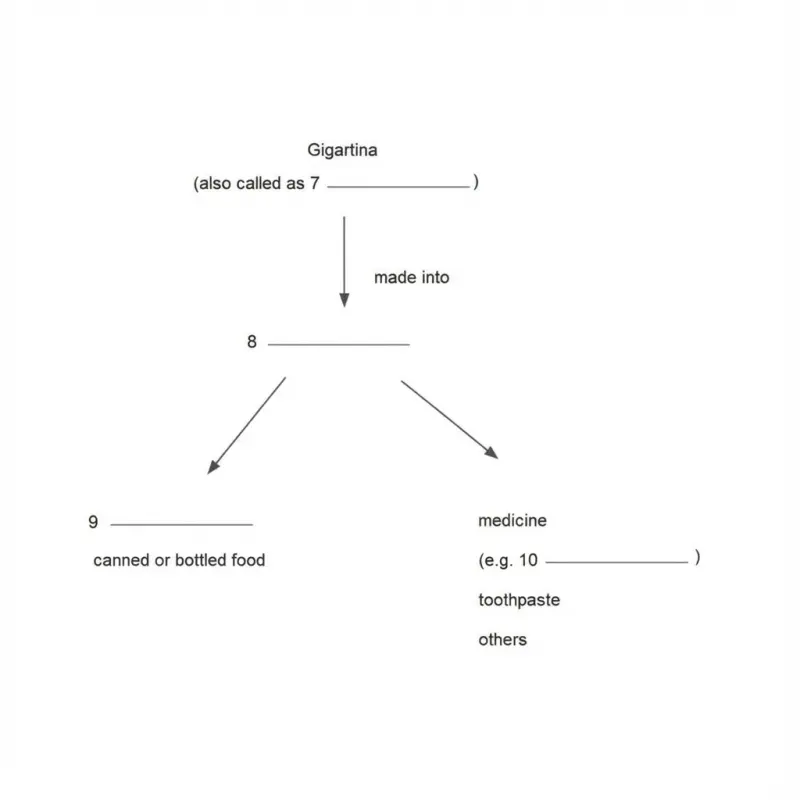
B. New Zealand lays claim to approximately 700 species of seaweed, some of which have no representation outside that country. Of several species grown worldwide, New Zealand also has a particularly large share. For example, it is estimated that New Zealand has some 30 species of Gigartina, a close relative of carrageen or Irish moss. These are often referred to as the New Zealand carrageens. The substance called agar which can be extracted from these species gives them great commercial application in the production of seameal, from which seameal custard (a food product) is made, and in the canning, paint and leather industries. Agar is also used in the manufacture of cough mixtures, cosmetics, confectionery and toothpastes. In fact, during World War II, New Zealand Gigartina were sent to Australia to be used in toothpaste.
C. New Zealand has many of the commercially profitable red seaweeds, several species of which are a source of agar (Pterocladia, Gelidium, Chondrus, Gigartina). Despite this, these seaweeds were not much utilised until several decades ago. Although distribution of the Gigartina is confined to certain areas according to species, it is only on the east coast of the North Island that its occurrence is rare. And even then, the east coast, and the area around Hokianga, have a considerable supply of the two species of Pterocladia from which agar is also made. New Zealand used to import the Northern Hemisphere Irish moss (Chondrus crispus) from England and ready-made agar from Japan.
D. Seaweeds are divided into three classes determined by colour – red, brown and green – and each tends to live in a specific position. However, except for the unmistakable sea lettuce (Ulva), few are totally one colour; and especially when dry, some species can change colour significantly – a brown one may turn quite black, or a red one appear black, brown, pink or purple. Identification is nevertheless facilitated by the fact that the factors which determine where a seaweed will grow are quite precise, and they tend therefore to occur in very well-defined zones. Although there are exceptions, the green seaweeds are mainly shallow-water algae; the browns belong to the medium depths; and the reds are plants of the deeper water, furthest from the shore. Those shallow-water species able to resist long periods of exposure to sun and air are usually found on the upper shore, while those less able to withstand such exposure occur nearer to, or below, the low-water mark. Radiation from the sun, the temperature level, and the length of time immersed also play a part in the zoning of seaweeds. Flat rock surfaces near midlevel tides are the most usual habitat of sea-bombs, Venus’ necklace, and most brown seaweeds. This is also the home of the purple laver or Maori karengo, which looks rather like a reddish-purple lettuce. Deep-water rocks on open coasts, exposed only at very low tide, are usually the site of bull-kelp, strapweeds and similar tough specimens. Kelp, or bladder kelp, has stems that rise to the surface from massive bases or ‘holdfasts’, the leafy branches and long ribbons of leaves surging with the swells beyond the line of shallow coastal breakers or covering vast areas of calmer coastal water.
E. Propagation of seaweeds occurs by seed-like spores, or by fertilisation of egg cells. None have roots in the usual sense; few have leaves; and none have flowers, fruits or seeds. The plants absorb their nourishment through their leafy fronds when they are surrounded by water; the holdfast of seaweeds is purely an attaching organ, not an absorbing one.
F. Some of the large seaweeds stay on the surface of the water by means of air-filled floats; others, such as bull-kelp, have large cells filled with air. Some which spend a good part of their time exposed to the air, often reduce dehydration either by having swollen stems that contain water, or they may (like Venus’ necklace) have swollen nodules, or they may have a distinctive shape like a sea-bomb. Others, like the sea cactus, are filled with a slimy fluid or have a coating of mucilage on the surface. In some of the larger kelps, this coating is not only to keep the plant moist, but also to protect it from the violent action of waves.
(Nguồn Internet)
Questions 14-19
Reading Passage 1 has six paragraphs, A-F.
Choose the correct heading for each paragraph from the list of headings below. Write the correct number, i-ix, in boxes 1-6 on your answer sheet.
Paragraph A
Paragraph B
Paragraph C
Paragraph D
Paragraph E
Paragraph F
List of Headings
i. The appearance and location of different seaweeds
ii. The nutritional value of seaweeds
iii. How seaweeds reproduce and grow
iv. How to make agar from seaweeds
v. The under-use of native seaweeds
vi. Seaweed species at risk of extinction
vii. Recipes for how to cook seaweeds
viii. The range of seaweed products
ix. Why seaweeds don’t sink or dry out
Questions 20-23
Using the image provided, complete the flowchart below. Choose NO MORE THAN THREE WORDS AND/OR A NUMBER from the passage for each answer.
Questions 23-26
Classify the following characteristics as belonging to:
A. brown seaweed
B. green seaweed
C. red seaweed
23. can survive the heat and dryness at the high-water mark
24. grow far out in the open sea
25. share their site with karengo seaweed
Đáp án:
|
14. v |
21. agar |
|
15. ii |
22. seameal |
|
16. viii |
23. cough mixture |
|
17. i |
24. B |
|
18. iii |
25. C |
|
19. ix |
26. A |
|
20. New Zealand carrageens |
You should spend about 20 minutes on Questions 27-40, which are based on Reading Passage 3 below.
The Peopling of Patagonia
Anthropologists continue to investigate human migration to Patagonia at the southern tip of South America.
The human settlement of the southern extremity of the Americas has always fascinated pre-historians. Viewed from a global perspective, this was the last major continental land mass to be reached by human beings. The earliest occupation of Patagonia carries obvious implications for understanding when the North and South American continents were peopled, because it gives a baseline that all calculations regarding the rate of dispersion of humans throughout both continents must take into account.
For many years the human settlement of North and South America has been conceived of as beginning in the far north and travelling progressively southwards to Patagonia. However, fundamental disagreements developed concerning the length of time involved. Some scholars accepted a human presence in the Americas as early as 20,000 years ago, while others proposed that it could date no earlier than 8,000 years ago, and the debate is still with us today.
The idea of a relatively “late” settlement of the Americas (around 8,000 years ago) implies that a rapid process of migration took place. Herein lies a second debate which revolves around the question of how migration is to be understood. The late model demands a hypothetical migration conceived of as a single, continually advancing wave of settlement. This has always been difficult to take seriously and many scholars now support the idea of an early model that sees the migration as a less ordered migration, and this is surely the most realistic scenario as migrants slowly adapted to the diverse natural habitats they would have met while travelling through the continent.
Those who argue for an earlier settlement, however, must contend with the lack of unequivocal evidence for archaeological sites older than around 14,000 years. Nevertheless, evidence for human occupation of the centre of South America is now securely dated to around 12,500 years ago at the Monte Verde site, which casts doubt on the late model. The lack of archaeological evidence further south for this time period may be explained by the obstacle to humans on foot posed by the huge glacial streams that were present at that time.
We can speculate then that the retreat of the Patagonian glaciers around 14,000 years ago allowed the initial human intrusion into a pristine environment, which was similar to that of early post-glacial Europe. Human settlement of the vast horizontal expanse of treeless high country must have been tenuous at best, and the evidence for this occupation remains relatively scant, most of it coming from rock shelters in Argentina and Chile. There is, however, reliable evidence from these sites to confirm the presence of humans by around 11,000 years ago in different habitats, and some hints of an even older occupation. However, some other sites where evidence for even earlier human occupation was initially posited, have recently come under fresh scrutiny. This is because anthropologists have come to recognise that bones or other evidence may be deposited in caves by natural agency, in other words by other forces such as floods or predators, and not necessarily by humans.
We shall turn now to a more detailed discussion of the archaeological evidence found in various parts of Patagonia. At the site located beside Chinchihuapi Creek, excavations have produced convincing evidence of human occupation, including hut foundations and wooden artefacts. They were buried in layers of peat, which has the property of preserving wood remarkably well, and as a result radiocarbon dating tests have shown these artefacts to date from around 12,500 years ago. One of the most famous Patagonian sites is a cave known as Los Toldos. However, the evidence from this site has recently been called into question, because dispersed flecks of carbon used in the test process were taken unsystematically from many different places in the site. As a result, the association of this material with the artefacts is not at all clear. About 150 kilometres south is the site called El Ceibo, where a similar collection of artefacts to that found at Los Toldos has been discovered from the lowest levels of the dig, but as yet no radiocarbon dates are available and this sort of analysis of the existing evidence is required before the site’s value can be confirmed.
The Arroyo Feo site is located very close to the high plateau. The artefacts from the earliest occupations were found at the same depth and have the same origins as those from Los Toldos, and have been securely dated to around 9,000 years ago. Another site that is mentioned in the debate is at Las Buitreras, where a number of stone flakes associated with bone remains of various animals have been discovered. However, anthropologists now believe that presumed cut marks on the bones are somewhat dubious, and despite detailed testing there is no way of securely relating any of these remains with human occupation. Finally some 50 kilometers to the south is the site at Cueva Fell, which was the first Patagonian site to be systematically studied by modern archaeological methods. However, it is now recognised that the utility of this site must be restricted to its direct vicinity, given changes to the nearby area caused by flooding, and findings cannot be freely extrapolated further afield.
In conclusion, based on the evidence from a number of reliable sites, it seems probable that human populations reached Patagonia around 11,000 years ago.

Questions 27-31
Choose the correct letter, A, B, C, or D.
Write the correct letter in boxes 27-31 on your answer sheet.
27. In the first paragraph, what is the writer’s main point about migration to Patagonia?
A. It started earlier than previously thought.
B. Historians have overlooked its importance.
C. It impacts on research into the wider region.
D. Researchers have calculated its effects on the environment.
28. In the second paragraph, what is the writer’s purpose?
A. to challenge previous research
B. to propose new areas to investigate
C. to summarise a scholarly debate
D. to suggest reasons for human migration
29. The writer refers to the “late” model in order to
A. compare it with another theory of migration.
B. evaluate the success of American migration.
C. criticise the speed of research into migration.
D. compare migration in different parts of the world.
30. What is the writer’s main point about the “early model”?
A. Scholars support the idea of fast migrations.
B. It is too random to be a convincing theory.
C. South America was more habitable at an earlier time.
D. It is more consistent with the physical conditions of the land.
31. What does the writer suggest about the Monte Verde site?
A. It is much younger than researchers once estimated.
B. It provides supporting evidence for relatively early settlement.
C. Archaeologists believe the site is of questionable value.
D. Streams exposed the site, making new research possible.
Questions 32 – 35
Do the following statements agree with the claims of the writer in Reading Passage 3?
In boxes 32-35 on your answer sheet, write
YES if the statement agrees with the claims of the writer
NO if the statement contradicts the claims of the writer
NOT GIVEN if it is impossible to say what the writer thinks about this
32. The conditions encountered by the first migrants to Patagonia were unique.
33. In the high country the first migrants hunted wild animals for food.
34. Archaeologists have failed to draw conclusions from the evidence found at rock shelters in Argentina and Chile.
35. Archaeological evidence can be moved from place to place in a variety of ways.
Questions 36 – 40
Complete the summary using the list of words and phrases, A-J, below.
Write the correct letter, A-J, in boxes 36-40 on your answer sheet.
The archaeological evidence from Patagonia
Building remains and other evidence have been found in 36………………….… at the Chinchihuapi Creek site, and because of this it has been possible to date them to around 12,500 years ago. However, the 37………………………………...of the samples taken from Los Toldos means that this site is of doubtful value. El Ceibo is a more promising dig, where the examination of artefacts would be beneficial in order to confirm the usefulness of discoveries there. The remains found at the Arroyo Feo site show 38…………………………….………and date from around 9,000 years ago. Unfortunately no 39…can be made between the samples taken from Las Buitreras and human presence. The findings of the work carried out at Cueva Fell cannot provide useful information beyond the 40. In conclusion, though the evidence is mixed, it is believed that human population of Patagonia began about 11,000 years ago.
A fixed date
B random collection
C similar properties
D good condition
E scientific evaluation
F huge quantities
G new samples
H reliable connection
I skilled preservation
J immediate surroundings
Đáp án:
|
27. C |
34. NO |
|
28. C |
35. YES |
|
29. A |
36. D |
|
30. D |
37. B |
|
31. B |
38. C |
|
32. NOT GIVEN |
39. H |
|
33. NOT GIVEN |
40. J |
You should spend about 20 minutes on Questions 1-13, which are based on Reading Passage 1 below.
Dolls Through the Ages
What is today a simple children’s toy has a surprisingly rich history. Dolls have been a part of humankind for thousands of years. Often depicting religious figures, or used as playthings, early dolls were probably made from primitive materials such as clay, fur, or wood.
Dolls constructed of flat pieces of wood, painted with various designs, and with hair made of clay, have often been found in Egyptian graves dating back to 2000 BC. Egyptian tombs of wealthy families have included pottery dolls. Dolls being placed in these graves leads some to believe that they were cherished possessions.
Girls from ancient Greece and Rome offered their wooden dolls to goddesses after they were too ‘grown-up’ to play with dolls. Most ancient dolls that were found in tombs were very simple creations, often made from such materials as clay, rags, wood, or bone. Some of the more unique dolls were made with ivory or wax. The main goal was to make the doll as lifelike as possible. That ideal led to the creation of dolls with movable limbs and removable garments, dating back to 600 BC.
Following the era of the ancient dolls, Europe became a major hub for doll production. These dolls were primarily made of wood. Fewer than 30 examples of primitive wooden stump dolls from England survive today. The Grodnertal area of Germany produced many peg wooden dolls, a type of doll that has very simple peg joints and resembles a clothespin (a device for hanging washing on a clothesline). An alternative to wood was developed in the 1800s.
‘Composition’ is a collective term for mixtures of pulped wood or paper that were used to make doll heads and bodies. These mixtures were moulded under pressure, creating a durable doll that could be mass produced. Manufacturers closely guarded the recipes for their mixtures, sometimes using strange ingredients like ash or eggshells. Papier-mâché, a type of composition, was one of the most popular mixtures.
In addition to wooden dolls, wax dolls grew in popularity in the 17th and 18th centuries. Much in Germany was a major manufacturing center for wax dolls. Wax dollmakers would model a doll’s head in wax or clay, and then cover it with plaster to create a mould. Then they would pour melted wax into the cast. The wax for the head would be very thin, no more than 3 mm. Some of the most distinctive wax dolls were created in England between 1850 and 1930. One of the first dolls that portrayed a baby was made in England from wax at the basinsion of the 10th centur
Around the same time porcelain became popular. It is made by firing special clays in a kiln at more than 2372 degrees Fahrenheit (1300°C), and only a few clays can withstand firing at such high temperatures. Porcelain is used generically to refer to both china and bisque dolls; china is glazed, whereas bisque is unglazed. Germany, France, and Denmark started creating china heads for dolls in the 1840s. These china heads were replaced in the 1860s by ones made of bisque. Bisque, which is porcelain fired twice with colour added to it after the first firing, looked more like skin than china did.
In France, the bébé was popular in the 1880s, and it has become a highly sought after doll today. The bébé, first made in the 1850s, was different from its predecessors because it depicted a younger girl. Until then, most French dolls were representations of adults. Although the French dolls were unrivalled in their artistry, German bisque dolls became quite popular because they were not as expensive. Kammer & Reinhardt introduced a bisque character doll in the 1900s, starting a trend of creating realistic dolls.
For many centuries, rag dolls were made by mothers for their children. The term ‘rag doll’ refers generically to dolls made of any fabric. ‘Cloth doll’ refers to a subset of rag dolls made of linen or cotton. Commercially produced rag dolls were first introduced in the 1850s by English and American manufacturers. Although not as sophisticated as dolls made from other materials, rag dolls were well loved, often as a child’s first toy.
Dollmaking did not become an industry in the United States until after the Civil War in the 1860s. Doll production was concentrated in the New England region of the United States, with dolls made from a variety of materials such as leather, rubber, papier-mâché, and cloth. Celluloid was developed in the state of New Jersey in the late 1860s and was used to manufacture dolls until the mid-1950s. German, French, American, and Japanese factories churned out cheaply produced celluloid dolls in mass quantities. However, celluloid fell out of favour because of its extreme flammability and propensity to fade in bright light.
After World War I, doll makers experimented with plastics. Hard plastic dolls were manufactured in the 1940s. They resembled composition dolls, but they were much more durable. Other materials used in doll manufacturing included rubber, foam rubber, and vinyl in the 1950s and 1960s. Vinyl changed doll making, allowing doll makers to root hair into the head, rather than using wigs or painting the hair. Although most dolls are now mass-manufactured using these modern materials, many modern doll makers are still using the traditional materials of the past to make collectible dolls.
(Nguồn Internet)
Questions 1–6
Complete the notes below.
Choose ONE WORD ONLY for each answer.
Dolls
Earliest known dolls
represented religious figures
used as toys
Egypt 2000 BC
bodies were made of 1…………………
2………………… was used for the hair
Ancient Greece and Rome
dolls were given to 3………………… by older girls
600 BC
realistic dolls had separate clothes and 4………………… that could be put in different positions
17th and 18th centuries
dolls made of 5…………………
moulds made of 6…………………
1800s
……………….. became more common
new manufacturing process developed
new group of mixtures known as …………………
recipes for these mixtures kept secret
Questions 7–13
Do the following statements agree with the text?
Write
TRUE – if it agrees;
FALSE – if it contradicts;
NOT GIVEN – if there’s no info
7. Bisque dolls appear less realistic than dolls made of china.
8. French dolls tended to cost more than German bisque dolls.
9. The first rag dolls were made in the 1850s.
10. Only dolls made of cotton or linen are classified as cloth dolls.
11. Dolls made of celluloid tended to lose their colour.
12. Composition dolls lasted longer than the plastic dolls that were made in the 1940s.
13. Doll collectors prefer a doll to be dressed in its original clothing.
Đáp án:
|
1. wood |
8. TRUE |
|
2. clay |
9. FALSE |
|
3. goddesses |
10. TRUE |
|
4. limbs |
11. TRUE |
|
5. wax |
12. FALSE |
|
6. plaster |
13. NOT GIVEN |
|
7. FALSE |

You should spend about 20 minutes on Questions 14-25, which are based on Reading Passage 2 below.
Plants wars
Mention the words “chemical warfare” or “deployed armies” in any conversation, and your interlocutor might immediately assume you’re talking about wars between humans. In reality, however, there are other kinds of wars out there where these techniques are employed far more frequently and in a far more intricate manner: those waged in the plant kingdom.
We might not normally think of plants this way, but much like humans and animals, they too have to fight for survival on a daily basis. Nutrients, light and water are the three things any plant needs in order to grow; unfortunately, none of these is ample in supply, which means that the competition between plants can grow fierce. Some plants and trees are of an architectural advantage: taller trees have greater access to natural light, while plants with deeper roots have the ability to absorb more water and nutrients. Others, though, manage to defend their territory through “allelopathy”, or chemical warfare.
So how does this chemical warfare work exactly? As Dr Robin Andrews explains, plants convert the nutrients they absorb from the ground to energy with the aid of a type of organic compound known as metabolites. These metabolites can be divided into two categories: primary and secondary. Primary metabolites are what allows a plant to live, playing a direct role in its growth and development, and are thus present in every plant. Secondary metabolites, on the other hand, can vary from plant to plant and often play the role of a defence mechanism against neighbouring competitors.
Out of these secondary metabolites, there are two that are incredibly interesting: DIBOA and DIMBOA. These two cyclic hydroxamic acids were at the forefront of a study conducted by Sascha Venturelli and colleagues in 2015, which found that once they are released into the soil by the plants that produce them, they degenerate into toxic substances that have the power to inhibit growth in nearby plants once they soak them up. As Dr Claude Becker notes, “the phenomenon” itself “has been known for years”, but we now finally understand the “molecular mechanism” behind it-and its supreme intricacy would put to shame any chemical bombs created by humans.
But plants do not just fight wars against other plants; chemical warfare also comes into play in their defence against herbivores. As Brent Mortensen of Iowa State University describes, plants “actively resist” attacks made by herbivores through qualitative and quantitative chemical defences. What’s the difference? Qualitative defences can be lethal even in small doses, and are often employed to protect “young” or “tender leaves or seeds”. They can also be recycled when no longer necessary. Quantitative defences, in contrast, are only effective “in larger doses”, but unlike qualitative defences, can protect the plant against all herbivores. Quantitative defences are also not as immediately lethal, as they usually lead to indigestion, pain, irritation of the mouth and throat, and inflammation or swelling in the skin.
And what about the “deployed armies” I mentioned before? Well, chemical attacks are not the only way plants elect to defend themselves against herbivores. Some plants, such as the African acacia, also recruit armies to assist them in their war. As Angela White of the University of Sheffield explains, the acacia tree has “hollowed-out structures” which invite ant colonies to build a home in them by providing not just shelter, but also food in the form of special nectar. In return, ants protect them against herbivores – and this includes not just the small ones like bugs, but also the ones as big as giraffes.
At this point, of course, you might be wondering what all this has to do with you. The territorial nature of plants might be fascinating in its own right, but what is its application in real life? Well, Dr Venturelli of the 2015 study mentioned before has an answer for you: apparently, certain allelochemicals – the aforementioned chemical compounds that are responsible for stunting growth in the plants – have been fund to have an effect on human cancer cells, too. According to Michael Bitzer and Ulrich Lauer of the same study, “clinical trials at the University Clinics Tübingen currently assess the efficacy of these plant toxins in cancer patients”. This means that comprehending the way plants defend themselves against the enemies in their environment might not just be of interest to plant biologists alone, but to medical researchers as well.
Questions 14-20
Complete the sentences below.
Choose NO MORE THAN THREE WORDS from Reading Passage 2 for each answer
Write your answers in boxes 14-20 on your answer sheet.
14 Plants are very similar to ……………………. as they also struggle to stay alive every day.
15 The height of a tree or plant can affect how much ……………………… it receives.
16 Chemical warfare in plants also goes by the name of ……………………..
17 Water and nutrients are both taken from the soil, and the latter is later turned into
18 Secondary metabolites are an ………………………. that functions as a defence mechanism for plants.
19 DIBOA and DIMBOA are two types of secondary metabolites that can …………………… once absorbed by a plant.
20 The 2015 study by Sascha Venturelli and colleagues examined the ……………………. of chemical warfare in plants.
Questions 21-25
Complete the diagram below.
Choose NO MORE THAN TWO WORDS from Reading Passage 2 for each answer.
Questions 26-27
Do the following statements agree with the information given in Reading Passage 2?
In boxes 26-27 on your answer sheet, write
TRUE - if the statement is true according to the passage
FALSE - if the statement is false according to the passage
NOT GIVEN - if the information is not given in the passage
26 Allelochemicals are secondary metabolites.
27 Plant biologists and medical researchers are currently cooperating to assess the efficacy of plant toxins in preventing the growth of cancer cells
Đáp án:
|
14. humans and animals |
21. small doses |
|
15. natural light |
22. all herbivores |
|
16. allelopathy |
23. immediately lethal |
|
17. energy |
24. hollowed-out structures |
|
18. organic compound |
25. giraffes |
|
19. inhibit growth |
26. TRUE |
|
20. molecular mechanism |
27. NOT GIVEN |
You should spend about 20 minutes on Questions 27-40, which are based on Reading Passage 3 below.
Let’s all be friends
New research shows how the people we are in social contact with can influence us for better – and worse. Governments should take heed.
From healthcare to climate change, governments today face a range of problems in which they must persuade people to change their behaviour. But maybe instead of relying on their powers of persuasion, governments should consider using the science of social networks as a tool to do this. True, many claims for the power of these are based on the hype surrounding major social networking websites. But the basic idea is simple: people can join together in groups with particular patterns of social links, and these patterns then have important effects on the way they behave.
The shape of these networks has surprising effects. Take an unlikely example: stage musicals. Brian Uzzi is a sociologist at Northwestern University in Chicago. He is also a big fan of musicals. Musicals have been big business for decades, but investors have to guess which shows will be a hit. Bye Bye Birdie, a profitable 1960 production, ran for 607 nights. Bring Back Birdie, its 1981 sequel, closed after just four. Intrigued, Uzzi used network science to find out why.
He investigated 321 American musicals that were launched between 1945 and 1989, paying particular attention to whether the team of director, producers, choreographers and writers had worked together before. After crunching the statistics, he discovered something remarkable. Teams who had never worked together, perhaps unsurprisingly, fared poorly: their ‘weak’ networks meant a lack of creative vision, and lots of failures. And at the other extreme, teams that had worked together successfully also tended to produce flops. Sometimes, lacking outside creative input, the team just rehashed the same ideas that worked the last time; sometimes, lacking newcomers, they ‘developed’ their vision in unwise ways. Either way, lightning rarely struck twice. But, in between, Uzzi found a point of balance. Groups with exactly the right mix of new and old participants reliably produced hits. This variation in the ‘density’ of the ties allowed easy communication and fostered greater creativity; new ideas from the outsiders meshed with the experience of the insiders. It made no difference whether a musical was about cats or roller-skating, or who starred in it – what mattered was the nature of the network binding its team together.
These insights have some fascinating consequences for policymaking-particularly in the area of health. According to network science, teenagers are more likely to adopt unhealthy eating habits if their friends’ friends consume junk food, even if they don’t personally know those individuals. Conversely, they may be encouraged to eat more healthily if their immediate friends do. This opens up opportunities for governments to reduce spending. For example, suppose a health authority has £100 and wants to improve the diets of ten people. If it invests £10 in each individual separately, it might only influence one or two. However, by investing the entire sum in persuading one or two key individuals who are central to a social network, the authority could trigger a cascade effect, influencing the entire group for a fraction of the cost. The same principle could be applied to other areas, such as encouraging physical exercise or quitting smoking.
However, the influence of networks is not always positive. The same mechanisms that can spread healthy behaviours can also amplify harmful ones. Financial panic, political extremism, and the rapid proliferation of unhealthy fads can all be accelerated by tightly-knit social networks. This presents a significant challenge for policymakers: how to harness the power of social connectivity for good while mitigating its potential for harm. Understanding the precise structure of these networks—identifying the key influencers and the strength of the connections between people—is therefore critical. Without this map of human relationships, any intervention risks being inefficient or could even produce unintended negative consequences.

Questions 27-31
Complete the summary below.
Choose NO MORE THAN TWO WORDS from the passage for each answer.
Brian Uzzi’s research into Broadway musicals revealed that the success of a production was not determined by its subject matter or cast, but by the 27………………………. of its creative team. He found that groups composed entirely of newcomers were often unsuccessful due to a lack of 28………………………. . Conversely, teams that had a history of working together also frequently produced 29………………………. because they tended to reuse old ideas. The most successful teams had a 30………………………. of experienced and new members. This balance in network 31………………………. promoted effective communication and creativity.
Questions 32-36
Do the following statements agree with the claims of the writer in Reading Passage 3?
Write:
YES if the statement agrees with the claims of the writer
NO if the statement contradicts the claims of the writer
NOT GIVEN if it is impossible to say what the writer thinks about this
32. Governments are currently very effective at using social network science.
33. Bring Back Birdie was financially successful.
34. Uzzi’s study analysed musicals from the first half of the 20th century.
35. The eating habits of a teenager can be affected by someone they have never met.
36. Investing money in central figures is guaranteed to be more cost-effective.
Questions 37-40
Complete the notes below.
Choose ONE WORD ONLY from the passage for each answer.
The Implications of Network Science
Positive use for governments:
Can be used to improve public health initiatives, e.g., diet and 37………………………. .
Targeting key people in a network can create a 38………………………. effect, influencing many others.
Risks and challenges:
Networks can also spread 39………………………. behaviours, like financial panic or extreme views.
To use networks effectively, policymakers must understand their 40………………………. .
Đáp án:
|
27. nature |
34. NO |
|
28. creative vision |
35. YES |
|
29. flops |
36. NO |
|
30. mix |
37. exercise |
|
31. density |
38. cascade |
|
32. NO |
39. harmful |
|
33. NO |
40. structure |
You should spend about 20 minutes on Questions 1-13, which are based on Reading Passage 1 below
A Brief History of Humans and Food
During the journey from our hunter-gatherer ancestors to the present day, there have been three seismic changes that have impacted the food we eat: the discovery of cooking, the emergence of agriculture, and the invention of methods of preserving food.
The 19th-century scientist Charles Darwin thought that cooking, after language, was the greatest discovery made by man. All of us eat some raw food, such as fruit and vegetables, but the great majority of food we consume is cooked. Cooking can turn plants that are inedible into edible food by destroying toxic chemicals that plants often manufacture to protect themselves against attack by insects or other herbivorous animals. These toxic chemicals are referred to as “plant secondary compounds” because they are not directly involved in the plant’s normal growth, development, and reproduction, and are produced purely as chemical defenses. They give many of the plants we consume, such as coffee or Brussels sprouts, their bitter taste.
Cooked food is often more digestible because heat breaks down tough cellulose cell walls in plants or tough connective tissue in animals. Chewing raw turnip, a plate of uncooked rice, or a raw leg of lamb is much harder work than eating the cooked equivalent. The energy expended in chewing to break down the tough material is replaced by energy from the fuel used in cooking the food, so the ratio of energy gained to energy expended by the body is greater when food is cooked.
Until the development of agriculture, hunter-gatherers spent up to seven hours a day gathering food. This all began to change around 10,500 years ago with the advent of farming, which led to dramatic changes in human societies. People began to create a variety of new tools to aid survival, and in turn, populations increased in size. These changes led to the possibility of specialization of different tasks within society. Around this time, writing became more sophisticated and allowed people to maintain records of the harvest and taxes. Eventually, formalized structures of government were established as people settled in one area.
The arrival of agriculture meant that, for the first time, our ancestors had more food than they could eat immediately. This, combined with the seasonality of production, led them to discover methods of preserving food: smoking, drying, adding acid by fermentation, or adding salt. These four methods all share one feature in common—they make the food a more hostile environment for bacteria that can cause it to spoil. They also tend to slow down natural chemical reactions in the food that would cause decay.
Although foods today are still preserved in these ancient ways, two more recent methods of preserving food have become more common: canning and freezing. Canning was invented by a Frenchman, Nicholas Appert, in the early 19th century. He sealed food in bottles fabricated from glass and then heated them in boiling water to cook the contents. Appert’s method had great advantages over older methods of food preservation: it could be applied to a wide range of foods, and the flavor and texture were similar to freshly cooked products. His idea was soon copied by an Englishman, Peter Durand. Until this point, containers had been too heavy to be widely used, but Durand produced the first ones which were lightweight and resistant to damage. Two years later, in 1812, two Englishmen, Bryan Donkin and John Hall, started the commercial canning of food, although the real rise in popularity of canning had to wait until the invention of the can opener in 1855. Until then, cans were opened with a chisel and hammer. Canning is an extremely effective way of preserving food: one can containing meat, dating back to 1824, was opened in 1939, and the contents were still in good condition.
In the 21st century, the dominance of canning as a method of food preservation has been overtaken by freezing. Chilling food to keep it fresh is an old idea. The earliest mentions of icehouses, thick-walled buildings, half underground, date back to 1700 BC in northwest Iran. In early 16th-century Italy, water was mixed with chemicals to lower its freezing point to -18 degrees Celsius. Several centuries later, frozen fish and other goods were transported by ship from Australia to England. However, the modern frozen food industry was started in the 1920s by an American, Clarence Birdseye. While on a fishing trip with the Inuit in the Canadian Arctic, Birdseye observed that rapid freezing creates smaller ice crystals and therefore causes less damage to food—a discovery he had not expected. Nevertheless, the major growth in demand for frozen food came with the arrival of freezers in ordinary people’s homes. The advantages of frozen over canned food include the fact that the flavor and consistency are often identical to the fresh product, and freezing can be used to preserve a wide variety of foods.
(Nguồn Internet)
Questions 1-5
Do the following statements agree with the information given in Reading Passage 1?
In boxes 1-5 on your answer sheet, write:
TRUE if the statement agrees with the information
FALSE if the statement contradicts the information
NOT GIVEN if there is no information on this
According to Darwin, cooking was the most significant development in human history.
The process of cooking gets rid of some plant poisons.
Eating cooked food is more energy efficient than eating raw food.
Clarence Birdseye had previously worked in the Australian food industry.
Birdseye’s trip with the Inuit confirmed what he already believed about rapid freezing.
Questions 6-13
Complete the notes below.
Choose ONE WORD ONLY from the passage for each answer.
Write your answers in boxes 6-13 on your answer sheet.
The development of agriculture and food preservation
The changes agriculture brought about were:
The development of equipment and larger 6. _______
The ability to keep 7. _______ as writing developed
The setting up of organized government
Food Preservation
Early methods of food preservation included:
Smoking
Acid or 8. _______
Adding salt
Canning
Nicholas Appert put food into containers
Appert’s method resulted in preserved food with the same taste and 9. _______ as fresh food
Peter Durand introduced cans that were lightweight and 10. _______
In 1855, the metal can opener replaced the 11. _______ and hammer used to open cans
Some food was still edible after more than 100 years, e.g., an old can of 12. _______
Freezing
Rapid freezing prevents the formation of large ice crystals and causes less 13. _______
Đáp án:
|
1. FALSE |
8. drying |
|
2. TRUE |
9. texture |
|
3. TRUE |
10. resistant |
|
4. NOT GIVEN |
11. chisel |
|
5. FALSE |
12. meat |
|
6. populations |
13. damage |
|
7. records |
You should spend about 20 minutes on Questions 14-25, which are based on Reading Passage 2 below.
Willpower
A. Although willpower does not shape our decisions, it determines whether and how long we can follow through on them. It almost single-handedly determines life outcomes. Interestingly, research suggests the general population is indeed aware of how essential willpower is to their wellbeing; survey participants routinely identify a ‘lack of willpower’ as the major impediment to making beneficial life changes. There are, however, misunderstandings surrounding the nature of willpower and how we can acquire more of it. There is a widespread misperception, for example, that increased leisure time would lead to subsequent increases in willpower.
B. Although the concept of willpower is often explained through single-word terms, such as ‘resolve’ or ‘drive’, it refers in fact to a variety of behaviours and situations. There is a common perception that willpower entails resisting some kind of a ‘treat’, such as a sugary drink or a lazy morning in bed, in favour of decisions that we know are better for us, such as drinking water or going to the gym. Of course this is a familiar phenomenon for all. Yet willpower also involves elements such as overriding negative thought processes, biting your tongue in social situations, or persevering through a difficult activity. At the heart of any exercise of willpower, however, is the notion of ‘delayed gratification’, which involves resisting immediate satisfaction for a course that will yield greater or more permanent satisfaction in the long run.
C. Scientists are making general investigations into why some individuals are better able than others to delay gratification and thus employ their willpower, but the genetic or environmental origins of this ability remain a mystery for now. Some groups who are particularly vulnerable to reduced willpower capacity, such as those with addictive personalities, may claim a biological origin for their problems. What is clear is that levels of willpower typically remain consistent over time (studies tracking individuals from early childhood to their adult years demonstrate a remarkable consistency in willpower abilities). In the short term, however, our ability to draw on willpower can fluctuate dramatically due to factors such as fatigue, diet and stress. Indeed, research by Matthew Gailliot suggests that willpower, even in the absence of physical activity, both requires and drains blood glucose levels, suggesting that willpower operates more or less like a ‘muscle’, and, like a muscle, requires fuel for optimum functioning.
D. These observations lead to an important question: if the strength of our willpower at the age of thirty-five is somehow pegged to our ability at the age of four, are all efforts to improve our willpower certain to prove futile? According to newer research, this is not necessarily the case. Gregory M. Walton, for example, found that a single verbal cue – telling research participants how strenuous mental tasks could ‘energise’ them for further challenging activities – made a profound difference in terms of how much willpower participants could draw upon to complete the activity. Just as our willpower is easily drained by negative influences, it appears that willpower can also be boosted by other prompts, such as encouragement or optimistic self-talk.
E. Strengthening willpower thus relies on a two-pronged approach: reducing negative influences and improving positive ones. One of the most popular and effective methods simply involves avoiding willpower depletion triggers, and is based on the old adage, ‘out of sight, out of mind’. In one study, workers who kept a bowl of enticing candy on their desks were far more likely to indulge than those who placed it in a desk drawer. It also appears that finding sources of motivation from within us may be important. In another study, Mark Muraven found that those who felt compelled by an external authority to exert self-control experienced far greater rates of willpower depletion than those who identified their own reasons for taking a particular course of action. This idea that our mental convictions can influence willpower was borne out by Veronika Job. Her research indicates that those who think that willpower is a finite resource exhaust their supplies of this commodity long before those who do not hold this opinion.
F. Willpower is clearly fundamental to our ability to follow through on our decisions but, as psychologist Roy Baumeister has discovered, a lack of willpower may not be the sole impediment every time our good intentions fail to manifest themselves. A critical precursor, he suggests, is motivation – if we are only mildly invested in the change we are trying to make, our efforts are bound to fall short. This may be why so many of us abandon our New Year’s Resolutions – if these were actions we really wanted to take, rather than things we felt we ought to be doing, we would probably be doing them already. In addition, Muraven emphasises the value of monitoring progress towards a desired result, such as by using a fitness journal, or keeping a record of savings toward a new purchase. The importance of motivation and monitoring cannot be overstated. Indeed, it appears that, even when our willpower reserves are entirely depleted, motivation alone may be sufficient to keep us on the course we originally chose.

Questions 14-20
Do the following statements agree with the information given in Reading Passage 3?
In boxes 14-20 on your answer sheet, write
TRUE - if the statement agrees with the information
FALSE - if the statement contradicts the information
NOT GIVEN - if there is no information on this
14. Willpower is the most significant factor in determining success in life.
15. People with more free time typically have better willpower.
16. Willpower mostly applies to matters of diet and exercise.
17. The strongest indicator of willpower is the ability to choose long-term rather than short-term rewards.
18. Researchers have studied the genetic basis of willpower.
19. Levels of willpower usually stay the same throughout our lives.
20. Regular physical exercise improves our willpower ability.
Questions 21-26
Look at the following statements (Questions 21-26) and the list of researchers below.
Match each statement with the correct person, A–D.
Write the correct letter, A–D, in boxes 37–40 on your answer sheet.
NB You may use some letters more than once.
This researcher …
21. identified a key factor that is necessary for willpower to function.
22. suggested that willpower is affected by our beliefs.
23. examined how our body responds to the use of willpower.
24. discovered how important it is to make and track goals.
25. found that taking actions to please others decreases our willpower.
26. found that willpower can increase through simple positive thoughts.
List of People
A. Matthew Gailliot
B. Gregory M. Walton
C. Mark Muraven
D. Veronika Job
E. Roy Baumeister
Question 27
Which of the following is NOT mentioned as a factor in willpower?
Willpower is affected by:
A physical factors such as tiredness
B our fundamental ability to delay pleasure
C the levels of certain chemicals in our brains
D environmental cues such as the availability of a trigger
Đáp án:
|
14. TRUE |
21. E |
|
15. FALSE |
22. D |
|
16. FALSE |
23. A |
|
17. TRUE |
24. C |
|
18. TRUE |
25. C |
|
19. TRUE |
26. B |
|
20. NOT GIVEN |
27. C |
You should spend about 20 minutes on Questions 27-40, which are based on Reading Passage 3 below.
Whale Culture
A. Most social scientists stubbornly resist the idea that animals have culture. Even such advanced cetacean mammals as whales and dolphins clearly don’t have art, literature, or architecture. But patient observation over many years has begun to reveal behaviors that can only have been learnt from other whales. And that, say whale biologists, constitutes culture.
B. So far, humpback and killer whales provide the best evidence of culture in cetaceans, and the song of the male humpback is among the most striking examples. Humpback populations in different oceans sing different songs, but within the same ocean they all stick to the same one. However, during the breeding season the sounds change, as it appears that females are drawn to novel songs. One male might add an extra set of groans; another might drop a series of grunts. Soon all the other males have altered their own rendition to incorporate the changes until they are once again singing the same song. Since this occurs among thousands of whales spread across a vast part of the planet, the change cannot be in response to any factor in the animals’ environment. The latest version of the song can be learnt only from other whales – almost certainly by imitation.
C. Culture plays an even bigger part in the life of killer whales. Nowhere is this more obvious than along the north-west coast of America, where killer whales are split into two distinct populations – ‘residents’ and ‘transients’. They live in the same stretch of water, but they don’t mingle. In effect, they belong to two quite separate cultures. Residents live in stable groups, or ‘pods’, made up of two or three mothers and their offspring – perhaps 20 whales in all. Calves stay with their mothers throughout adulthood, and in many years of observation no one has ever seen a whale switch pods. Transients travel in smaller, more changeable groups of between three and six.
D. One of the most obvious distinctions between the transient and resident societies IS the way they impart information. Killer whales detect prey with a range of echo locating clicks, but converse with a vocabulary of squeaks, whistles and whines. Transients have only a few such calls, and all transient societies share the same ones. Residents have a much more extensive repertoire, and each family group has its own unique and distinctive set of calls. Despite regular interaction between them, each resident pod sticks firmly to its own dialect. Research shows these dialects are maintained for at least 40 years.
E. To qualify as part of killer whale culture, dialects must be learnt from other members of the pod. Animals with different dialects share the same waters, so the variations can’t be a product of the physical environment. “ And we can throw out the notion that the dialects are inherited,” says Lance Barrett-Lennard of the University of the British Columbia. He has spent the past seven years analyzing DNA from 270 whales. His paternity tests reveal that female killer whales invariably attract mates from outside their own pod – males with a very different dialects. If dialects were programmed by genetics, call patterns from both father and mother would be passed on the cafl. “A calf uses the calls of its maternal pod very precisely. There’s no input from the father,’ says Barrett-Lennard.
F. The question still remains – is this culture? It is, according to Frans de Waal of Emory University in Atlanta, who argues that culture is just another biological adaptation that has evolved in many creatures. One benefit of viewing culture in this way is that you can start to understand how and why it might have arisen in these creatures. Whales have several biological attributes that give them an advantage in social learning. Apart from their advanced mental abilities, they are adept at recognising sounds: ideal for communication in the marine environment. Many species spend years rearing their offspring, and live in small, stable, multi-generational societies, a social system that provides ample opportunity for teaching and learning.
G. But why have cetaceans evolved the ability to learn from other group members? Experts in whale biology believe that ecological factors and the need to adapt to sudden changes in the environment played a large part in the emergence of culture. Although the ocean is a relatively stable habitat in many ways, it is highly changeable in one crucial respect – the availability of food. One moment there might be a plentiful supply of fish, the next they’ve disappeared. When that happens, the past experience of the senior members of the group – and the ability to share this knowledge – is a huge asset. The dialects of killer whales allow members of the groups to identify each other, enabling them to share information about food hot spots. Among resident killer whales, it also allows females to avoid inbreeding by picking out a mate with a strange dialect from outside their pods, says Barrett-Lennard.
H. The importance of share information seems to have led to biological changes in at least some species of whale. Female killer whales, like humans, are very unusual in that they live up to a quarter of a century after they had their last offspring. This only makes sense if they have something useful to give their descendants. And what whale matriarchs offer is the most important thing of all – cultural knowledge, vital for the group’s survival, passed directly from one generation to the next.

Questions 27-32
Do the following statements agree with the information given in the Reading Passage? In boxes 27-32 on your answer sheet, write
TRUE - if the statement agrees with the information.
FALSE - if the statement contradicts the information.
NOT GIVEN - if there is no information on this.
27. Resident killer whales appear to remain with their maternal group for life
28. Resident killer whales have a more restricted range of calls than transients.
39. There is a vocabulary of sounds which is common to all transient killer whales
30. Resident killer whales share the dialects of other resident communities living in the same waters.
31. The dialects of transient killer whales remain constant over time
Questions 32-34
Complete the summary below.
Choose NO MORE THAN TWO WORDS from the passage for each answer
Write your answers in boxes 32-34 on your answer sheet.
It has been observed that resident killer whales invariably live in fixed family groups, known as 32………………………… Each of these has its own unique set of calls, despite close contact with other family groups. As the same areas of ocean contain many different groups with widely varying dialects, it is clear that these differences could not have emerged as a result of the whales’ 33……………………….…… .
According to tests conducted by Lance Barrett-Lennard, a calf communicates exclusively with the dialect of the group to which its 34…………………………….………belongs. Barrett-Lennard also rejects the idea that the call patterns are inherited.
Questions 35-37
Choose THREE letters. A-F
Write the correct letters in boxes 35-37 on your answer sheet
Which THREE of the following features of whales are mentioned in the passage’?
A intelligence
B physical strength
C sensitivity to sound.
D prolonged life span
E lengthy period of fertility
F adaptability to a variety of foods
Questions 38-40
Reading Passage 3 has eight paragraphs, A-H
Which paragraph contains the following information?
Write the correct letter A-H in boxes 38-40 on your answer sheet.
38. an example of the kind of information passed by whales to each other
39. a reference to variations in communication styles between different cultures within one species
40. ways in which the skills of whales are favorable for the development of culture
Đáp án:
|
27. TRUE |
34. mother |
|
28. FALSE |
35. A |
|
29. TRUE |
36. C |
|
30. FALSE |
37. D |
|
31. NOT GIVEN |
38. G |
|
31. pods |
39. D |
|
33. . physical environment |
40. F |
>>> XEM THÊM:
Để giúp người học làm quen với cấu trúc đề thi thực tế, nắm rõ dạng câu hỏi thường gặp và chiến lược làm bài hiệu quả, việc luyện tập với các đề thi thật kèm đáp án chi tiết là bước không thể thiếu. Trong phần dưới đây, bài viết đã tổng hợp 15 đề thi thật được chọn lọc kỹ lưỡng, giúp bạn vừa tự kiểm tra trình độ, vừa rút kinh nghiệm từ lời giải để cải thiện điểm số
|
A brief history of humans and food |
|
|
The Art of deception IELTS Reading |
|
|
Renewable Energy |
|
|
The Impact of Invasive Species |
|
|
Sorry - Who Are You? |
|
|
Marketing and the information age |
|
|
Advertising needs attention |
|
|
Mind music |
|
|
Conformity |
|
|
Computer Games |
|
|
Stepwells |
|
|
Building A Castle |
|
|
A brief introduction to pepper |
|
|
Katherine Mansfield |
|
|
The importance of law |
Bên cạnh các đề thi thật, bộ đề IELTS Reading Cambridge luôn được xem là nguồn tài liệu luyện thi chuẩn mực và đáng tin cậy nhất cho người học IELTS. Các đề trong bộ Cambridge không chỉ bám sát định dạng đề thi chính thức, mà còn phản ánh chính xác độ khó, cách ra câu hỏi và tiêu chí đánh giá của kỳ thi IELTS.
Dưới đây là tổng hợp đầy đủ các đề IELTS Reading Cambridge giúp bạn luyện tập một cách có hệ thống, nâng cao kỹ năng đọc hiểu học thuật, đồng thời rèn luyện tốc độ và độ chính xác khi làm bài trước kỳ thi thật.
|
Back to the future of skyscraper design [Cam IELTS 14, Test 2] |
|
|
Motivational factors and the hospitality industry [Cam IELTS 14, Test 1] |
|
|
the development of the London underground railway [Cam 17, Test 1] |
|
|
Why companies should welcome disorder [Cam 14, Test 2, Passage 3] |
|
|
Why we need to protect polar bears [Cam 16 Test 1] |
|
|
The white horse of uffington [Cam 16, Test 2] |
|
|
How to make wise decisions [Cam 16, Test 2] |
|
|
I Contain Multitudes [Cam 16, Test 2] |
|
|
Urban farming [Cam 18, Test 1] |
|
|
The concept of intelligence [Cam 16, Test 3] |
|
|
Changes in reading habits [Cam 16, Test 4, Passage 2] |
|
|
Roman shipbuilding and navigation [Cam 16, Test 3] |
|
|
Having A Laugh [Cam 15, Test 2] |
|
|
Palm Oil [Cam 17, Test 3] |
|
|
Roman tunnels [Cam 16, Test 4, Passage 1] |
>>> XEM THÊM:
Trong các kỹ năng của kỳ thi IELTS, Reading luôn là phần khiến nhiều học viên áp lực do yêu cầu khả năng đọc nhanh, chọn lọc thông tin và áp dụng chiến lược làm bài hợp lý trong thời gian giới hạn. Khi người học nắm vững cách làm Reading IELTS cùng phương pháp xử lý riêng cho từng dạng câu hỏi, việc hoàn thành bài thi sẽ trở nên chủ động hơn và hạn chế tối đa sai sót không đáng có.
Một đề thi IELTS Reading được thiết kế gồm 3 phần, tương ứng với Passage 1, Passage 2 và Passage 3. Ở hình thức General Training, độ dài các đoạn văn có sự khác biệt, thường dao động từ 700 đến 1500 từ và tăng dần về độ khó. Đối với Academic IELTS, cả ba passage có độ dài tương đối ngang nhau với lượng thông tin học thuật lớn, tổng số chữ có thể lên tới khoảng 1500 từ cho mỗi đoạn, yêu cầu kỹ năng đọc hiểu và quản lý thời gian hiệu quả.
Đề thi IELTS Reading sẽ gồm 3 phần
Các dạng bài Reading IELTS bao gồm:
Dạng câu hỏi xác định thông tin đúng, sai hoặc không được đề cập như True/ False/ Not Given hoặc Yes/ No/ Not Given
Dạng chọn và nối tiêu đề cho đoạn văn – Matching Heading Questions
Dạng chọn và nối đặc điểm – Matching features
Dạng liên kết thông tin giữa câu hỏi và bài đọc – Matching information
Dạng hoàn thành câu chưa trọn vẹn hoặc nối phần kết câu – Matching endings
Dạng chọn đáp án chính xác – Multiple choice
Dạng trả lời câu hỏi ngắn – Short answer questions
Dạng điền thông tin vào bảng, biểu đồ, ghi chú hoặc sơ đồ – Completing tables, charts, notes, diagrams
Dạng hoàn thành câu văn ngắn – Completing sentences
Dạng điền từ hoặc cụm từ vào chỗ trống trong đoạn tóm tắt – Summary Completion
Trong cấu trúc đề thi IELTS Reading, Passage 1 thường được đánh giá là phần dễ tiếp cận nhất, phù hợp để thí sinh khởi động và ghi điểm chắc chắn. Ở phần này, các dạng câu hỏi xuất hiện phổ biến gồm True/ False/ Not Given, nhóm bài Completion như hoàn thành bảng, biểu đồ, ghi chú, sơ đồ và dạng câu hỏi trả lời ngắn. Nội dung đoạn văn thường xoay quanh chủ đề quen thuộc, giúp người học áp dụng kỹ năng đọc hiểu cơ bản và quản lý thời gian hiệu quả ngay từ đầu bài thi.
Các bước làm phần thi Reading Passage 1 hiệu quả như sau:
Bước 1: Đọc toàn bộ đoạn văn và hệ thống câu hỏi để nắm rõ yêu cầu chung của đề bài, đồng thời hình dung sơ bộ nội dung chính của passage.
Bước 2: Xác định từ khóa quan trọng trong từng câu hỏi, tập trung vào thông tin trọng tâm mà đề đang hướng tới.
Bước 3: Tìm vị trí trong bài đọc chứa thông tin liên quan đến từ khóa đã xác định nhằm khoanh vùng khu vực có khả năng xuất hiện đáp án.
Bước 4: Đọc kỹ đoạn thông tin đó để đối chiếu yêu cầu câu hỏi và chọn đáp án phù hợp, tránh đọc dàn trải các phần không liên quan để tiết kiệm thời gian làm bài.
Bước 5: Hoàn thành việc chọn đáp án hoặc điền thông tin vào câu, bảng hay biểu đồ theo yêu cầu, sau đó kiểm tra lại chính tả và cấu trúc ngữ pháp trước khi chuyển sang câu hỏi tiếp theo.
Lưu ý: Từ khóa trong IELTS Reading Passage 1 có thể xuất hiện dưới dạng danh từ, động từ hoặc tính từ liên quan đến tên riêng như người, địa điểm, động vật, cũng như các con số về thời gian, số lượng hay tỷ lệ phần trăm. Bên cạnh đó, câu hỏi thường sử dụng các đại từ thay thế như this, that, these, those hoặc it, yêu cầu thí sinh xác định chính xác đối tượng được đề cập để tránh hiểu sai nội dung và chọn nhầm đáp án.
Trong cấu trúc đề thi IELTS Reading, Passage 2 thường có độ khó cao hơn Passage 1 và yêu cầu người học vận dụng kỹ năng đọc hiểu sâu hơn. Ở phần này, các dạng câu hỏi xuất hiện phổ biến gồm Matching Headings Questions, Matching Information, Matching Features, Sentence Completion và Summary Completion. Nội dung bài đọc mang tính học thuật rõ ràng hơn, đòi hỏi khả năng xác định ý chính, liên kết thông tin và xử lý từ vựng học thuật một cách linh hoạt, phù hợp với những ai đang luyện Reading IELTS Academic hoặc hướng đến band điểm khá trở lên.
Các bước làm bài giúp bạn xử lý hiệu quả phần thi Reading Passage 2 như sau:

Bước 1: Chia toàn bộ nội dung bài đọc thành các đoạn nhỏ theo cấu trúc sẵn có để dễ theo dõi và quản lý thông tin khi làm bài.
Bước 2: Đọc từng đoạn văn một cách tập trung nhằm nắm bắt nội dung chính và đối tượng được đề cập trong mỗi đoạn, từ đó hình thành bản đồ ý tưởng cho toàn bài.
Bước 3: Xem kỹ yêu cầu và câu hỏi của đề thi để hiểu rõ dạng bài IELTS Reading đang xuất hiện và cách thức trả lời phù hợp.
Bước 4: Xác định tên người, sự vật hoặc khái niệm mà câu hỏi đề cập trong đoạn văn đầu tiên, nếu chưa tìm được thông tin cần thiết thì tiếp tục dò sang các đoạn kế tiếp cho đến khi khoanh vùng được vị trí đáp án.
Bước 5: Xác định phần thông tin còn thiếu, đối chiếu với nội dung bài đọc rồi điền từ hoặc chọn đáp án chính xác, sau đó kiểm tra lại chính tả và cấu trúc ngữ pháp trước khi chuyển sang câu hỏi tiếp theo.
Trong cấu trúc đề thi IELTS Reading, Passage 3 được xem là phần có mức độ thử thách cao nhất, thường xuất hiện ở cuối bài thi và tập trung kiểm tra năng lực đọc hiểu học thuật chuyên sâu. Ở phần này, các dạng câu hỏi phổ biến gồm Yes/ No/ Not Given, Summary Completion với ô trống, Multiple-choice Questions và Matching Endings. Nội dung bài đọc thường mang tính trừu tượng, giàu lập luận và sử dụng nhiều từ vựng học thuật, phù hợp với thí sinh đang luyện IELTS Reading Academic hoặc đặt mục tiêu band điểm cao.
Chiến lược để hoàn thành tốt phần thi Passage 3 như sau:
Với dạng câu hỏi Yes/ No/ Not Given, cách tiếp cận tương tự dạng True/ False/ Not Given đã áp dụng ở Passage 1, tập trung đối chiếu thông tin trong câu hỏi với nội dung bài đọc để xác định mức độ trùng khớp về ý nghĩa.
Với dạng câu hỏi Matching Endings, thí sinh nên xử lý lần lượt từng câu, xác định từ khóa trong đề bài, sau đó dò tìm thông tin liên quan trong đoạn văn. Khi đã khoanh vùng được phần nội dung chứa đáp án, cần đọc kỹ toàn bộ câu để lựa chọn phần kết phù hợp nhất về mặt ý nghĩa và ngữ cảnh.
Lưu ý:
Reading Passage 3 thường được dùng để phân loại trình độ thí sinh khá và giỏi, nên yêu cầu về tư duy đọc hiểu và xử lý thông tin cao hơn rõ rệt so với Passage 1 và Passage 2. Bên cạnh việc xác định từ khóa và thông tin liên quan, người làm bài cần chú ý đến thì của động từ, sắc thái nghĩa của từ vựng và mối quan hệ logic giữa các ý nhằm lựa chọn hoặc điền đáp án chính xác
Khi luyện đề IELTS Reading nhiều học viên thường gặp khó khăn trong việc xác định dạng câu hỏi và áp dụng từ vựng học thuật một cách chính xác. Để đạt hiệu quả cao, cần có một kế hoạch ôn tập logic, kết hợp với chiến lược làm bài rõ ràng và sự hỗ trợ từ giáo viên nhiều kinh nghiệm. Để đáp ứng nhu cầu, Langmaster xây dựng các khóa học IELTS online với lộ trình cá nhân hóa. Học viên sẽ được giảng viên theo sát, chỉ ra lỗi sai ngay lập tức trong vòng 24 giờ và hướng dẫn phương pháp học tập tối ưu để tiến bộ nhanh chóng hơn.

Tại Langmaster học viên được:
Coaching 1 - 1 với chuyên gia: Học viên được kèm riêng để khắc phục điểm yếu, phân bổ thời gian thi chi tiết, tập trung rèn kỹ năng chưa vững và rút ngắn lộ trình nâng band.
Sĩ số lớp nhỏ, 7 - 10 học viên: Giáo viên theo sát từng bạn, nhiều cơ hội trao đổi và nhận phản hồi chi tiết.
Lộ trình học cá nhân hóa: Thiết kế dựa trên trình độ đầu vào và mục tiêu điểm số, kèm báo cáo tiến bộ hàng tháng.
Giáo viên 7.5+ IELTS: Chấm chữa bài trong 24 giờ, giúp bạn cải thiện nhanh chóng và rõ rệt.
Thi thử định kỳ: Mô phỏng áp lực thi thật, phân tích điểm mạnh - yếu để điều chỉnh chiến lược học.
Cam kết đầu ra, học lại miễn phí: Đảm bảo kết quả, giảm thiểu rủi ro “học xong vẫn chưa đạt mục tiêu”.
Bên cạnh đó, học viên cũng có thể tham gia lớp học trực tiếp tại Hà Nội tại 3 cơ sở để nâng cao trải nghiệm học tập:
169 Xuân Thủy
179 Trường Chinh
N03-T7 Ngoại Giao Đoàn
Đăng ký ngay khóa IELTS online cho người mới bắt đầu tại Langmaster để trải nghiệm lớp học thực tế và nhận lộ trình học IELTS cá nhân hóa giúp bạn tăng band hiệu quả!
Khi ôn luyện đề IELTS Reading học viên không chỉ nắm vững đáp án đúng mà còn phát triển khả năng phân tích theo từng dạng câu hỏi một cách logic. Việc kết hợp từ vựng học thuật trong ngữ cảnh thực tế giúp ghi nhớ hiệu quả, đồng thời mở rộng vốn từ cần thiết cho kỹ năng đọc học thuật.





Các dạng bài phổ biến và tiêu chí chấm điểm IELTS Reading chi tiết nhất: Multiple Choice, Matching Information, Matching Headings,... và hướng dẫn chiến lược làm bài hiệu quả

Những sai lầm khi luyện IELTS Reading bao gồm: dịch từng từ, đọc hết cả bài, không đọc câu hỏi trước, không quản lý thời gian, không nắm vững kỹ năng paraphrase, viết sai chính tả
![Giải đề IELTS Reading: A brief history of humans and food [full answers]](https://langmaster.edu.vn/storage/images/2025/09/20/a-brief-history-of-humans-and-food-ielts-reading-answers.webp)
Giải đề thi IELTS Reading “A brief history of humans and food” kèm full đề thi thật, câu hỏi, đáp án, giải thích chi tiết, và từ vựng cần lưu ý khi làm bài.

Tổng hợp IELTS Reading tips hay nhất giúp bạn đọc nhanh, nắm ý chính và xử lý thông tin chính xác, tự tin đạt điểm cao trong kỳ thi IELTS.
![Giải đề IELTS Reading: The importance of law [Full answers]](https://langmaster.edu.vn/storage/images/2025/09/22/55.webp)
Giải đề IELTS Reading “The importance of law” kèm đáp án chi tiết, từ vựng quan trọng và bí quyết luyện thi hiệu quả để nâng cao band điểm.





Hơn 16 năm kinh nghiệm, đào tạo thành công 800.000+ học viên
Phương pháp giảng dạy hiện đại, học viên tiến bộ rõ rệt
Lộ trình học chuẩn quốc tế, phù hợp với nhu cầu thực tiễn
Giáo viên đạt chuẩn Quốc tế với chất lượng top đầu thị trường, giàu kinh nghiệm
Học online linh hoạt, cam kết đầu ra bằng văn bản

![Giải IELTS Reading Cam 18, Test 1: Urban farming [FULL ANSWERS]](https://langmaster.edu.vn/storage/uploads/original/2025/12/04/urban-farming-ielts-reading-answers.png)